Can you travel abroad with limited mobility? Yes, it can be possible with arrangements that fit your needs. Whether you use a wheelchair, walk with a cane, or rely on a walker, this guide answers practical questions about airports, hotels, transportation, and traveling with a supportive partner.
This is written for the traveler using a mobility aid, the traveler considering one, and the spouse or partner helping along the way. Your needs may differ, but you deserve clear answers before spending money.
Planning Travel Abroad with Limited Mobility
Book and pace the trip around a realistic lower-energy day. That means shorter sightseeing blocks, seated breaks, and space between outings. Have a backup plan for days when staying in feels best.
Consider walking distance, standing time, stairs, and transfers separately. Using a wheelchair doesn’t tell someone whether you can stand; using a cane doesn’t mean you can manage airport distances.
The CDC recommends a pre-travel health appointment four to six weeks before departure. Discuss your itinerary, prolonged sitting, fatigue, and any transfer or pressure-care needs. A local overnight stay can also help you test equipment, luggage, and assistance arrangements before traveling farther.
Airport Assistance for Travelers with Limited Mobility
Can I request an airport wheelchair even if I don’t normally use one? Yes. You may need assistance with long terminal walks or standing without using a wheelchair at home. Request help when booking and reconfirm before departure and at check-in. Explain whether you also cannot climb aircraft steps or need help reaching your seat. Confirm assistance for connections and arrival, and allow generous connection time.
At U.S. security checkpoints, tell the officer what you can safely do. Mobility aids must be screened, but don’t assume you must stand or walk unsupported. TSA’s disability guidance explains the process; procedures abroad can differ.
How will I get into my airplane seat—and use the bathroom? Ask about boarding assistance, seat transfers, and bathroom access separately. A narrow boarding chair helps passengers reach their seats; an onboard wheelchair may help them reach the lavatory. Neither guarantees that the bathroom suits your needs.
Before booking, confirm the scheduled aircraft’s facilities, onboard wheelchair availability, and notice requirements with the operating airline. Airline assistance does not include all personal care, such as help with toileting or clothing. If you need that support, arrange it beforehand.
The DOT’s Airline Passengers with Disabilities Bill of Rights covers all U.S.-airline flights and foreign-airline flights to or from the United States. Separate foreign-airline flights abroad may follow different rules. On covered flights, ask for the airline’s Complaint Resolution Official if disability-related assistance problems arise.
Bring your own gear, or rent at the destination? Choose equipment around your comfort, support, and independence. A folding manual chair suits some travelers; others depend on their power chair. Don’t assume a partner can safely lift an occupied chair over obstacles.
Confirm dimensions, weight, battery requirements, and handling instructions with every operating airline. Ask where your device will be handed over and returned. Photograph its condition before handover. If renting, reserve suitable equipment and confirm delivery before arrival, including how you’ll manage until it reaches you.
Ask about cabin storage for smaller aids and whether they can accommodate your folding chair; don’t assume everything must be checked. For powered equipment, check charger compatibility with the destination’s electricity supply and the plug shape. Keep essential removable accessories with you when possible, following the airline’s instructions.
Choosing Where to Travel Abroad with Limited Mobility.
Not every part of a destination needs to work for your trip, but the places and routes you plan to use do. Build an itinerary around verified access rather than a city’s general reputation.
Vietnam and Thailand offer useful examples. If considering Da Nang, Ho Chi Minh City, Bangkok, or Chiang Mai, check specific hotels, transport services, and attractions. An accessible room doesn’t establish that the nearby pavement, beach entrance, or temple is manageable.
For Bangkok’s Skytrain, use BTS station facilities information and confirm the entrances, lifts, and transfers needed for your route. Check current conditions before setting out. The same approach applies anywhere: assess the whole journey, including the distance beyond the station.
This is the kind of destination-specific research to discuss when requesting a Know Before You Go Report from Traveling Savvy Seniors. Be clear about your access needs and which details still require confirmation directly with providers.
More helpful reading: Slow Travel After 50: Destinations That Fit Your Pace

Will I actually be able to leave the hotel and enjoy the neighborhood?
This is a fair worry. Ask whether the surrounding route has usable sidewalks, curb ramps, crossings, seating, and shade. How far is the nearest place you actually want to visit, and what is the surface like?
“Five minutes from the beach” may involve stairs or a busy road. Request recent photos or video of the route, and check a realistic alternative if it doesn’t work. For someone using a cane, standing and heat may be as limiting as distance. For a wheelchair user, one missing curb ramp can interrupt an otherwise suitable outing.
How can I tell whether an “accessible” hotel room will actually work for me?
Call the hotel directly, then request current photos, relevant measurements, and written confirmation. Check the step-free route from entrance to room, elevator access, doorway widths, bed height, and space beside the bed and toilet for transfers.
Ask about shower thresholds, installed grab bars, and suitable shower seating. If you need a hoist or other equipment, confirm availability and compatibility with the room. A roll-in shower alone doesn’t establish that the bathroom works for you.
Make sure the required room features are confirmed rather than merely requested. Ask what happens if that room becomes unavailable, and how the hotel would assist you during an elevator outage or evacuation if you cannot use stairs.
Getting around if you can’t use a regular taxi or climb into a tour van
A private driver offers flexibility, but doesn’t automatically solve vehicle access. If you transfer into a car, check seat height, doorway space, assistance available, and storage for your mobility aid and bags.
If you remain in your wheelchair, confirm a suitable wheelchair-accessible vehicle with a ramp or lift, adequate dimensions and capacity, wheelchair securement, and passenger restraints. Ask for photos and confirmation of the actual vehicle. “Senior-friendly” isn’t enough.
Arrange the return journey and a backup if the vehicle becomes unavailable. For airport arrival, confirm the meeting point, who handles luggage, and where airport assistance ends. Check that your room and any rented equipment will be ready when you arrive.
Can my partner realistically provide all the help I’ll need?
That depends on your routines and the trip. Some travelers manage independently; others need occasional or ongoing help. Discuss specific tasks together: transfers, dressing, pushing where needed, luggage, and navigation.
Unfamiliar surfaces and long days can make familiar tasks harder. A driver or porter can reduce the workload, but isn’t a substitute for a personal-care attendant. If you need hands-on care, arrange suitable support rather than assuming hotel staff can provide it.
Plan breaks for both of you, and decide what happens if the person helping becomes unwell. If a partner needs time off, establish who will provide any essential assistance during that time.
Will I hold everyone up—or still enjoy the trip if I do less?
Seeing three places comfortably can be more satisfying than rushing through eight. Build the itinerary around your pace from the beginning.
Before joining a tour, ask for actual walking distances, standing time, steps, terrain, bathroom stops, and options to leave early. “Easy” or “leisurely” doesn’t tell you enough.
A day might include one museum visit, a seated lunch, and an afternoon resting. Another might be a scenic drive or time at a waterfront café. Choose experiences you enjoy, with enough flexibility to change plans without feeling you’ve spoiled the day.
What if I can’t find a bathroom I can use?
Accessible bathrooms are genuinely rare outside malls, international hotels, and a handful of tourist sites in both Vietnam and Thailand — restaurants, markets, and street-level shops usually don’t have them. The practical workaround is to plan bathroom stops around malls and hotels rather than assuming one will turn up nearby, and to carry a portable option for the gaps between them. A restroom-locator app like Toilet Finder can also save you some guesswork — it lists over 150,000 restrooms worldwide and lets you filter for ones with disabled access. It’s not glamorous advice, but it’s the honest version.
If you already use portable toileting equipment, consider whether it fits your travel arrangements, including privacy, cleaning, storage, and assistance. It isn’t a universal replacement for a usable bathroom.
How much extra should I budget to travel comfortably?
Before you travel abroad with limited mobility, price the arrangements you need: suitable transfers, equipment rental, an appropriate room, and any paid assistance.
Compare the total trip cost. A better-located hotel may reduce transport needs, while fewer hotel changes can reduce transfer costs and fatigue. Leave a buffer for replacement transport, changed plans, or an extra night’s stay.
Check cancellation terms carefully, especially when a particular room or vehicle is essential. Keep written access confirmations with your booking records so everyone knows what was agreed.
More helpful reading: Travel After 50: Why Comfort Is No Longer Optional
What happens if my wheelchair breaks, I become unwell, or arrangements fall through?
Identify equipment repair or replacement contacts before leaving. Carry device details and simple handling instructions, and report airline-related damage promptly, keeping photos and written records. A replacement chair must suit your needs; any available chair may not be enough.
Keep medication and essential supplies accessible during travel, with extra for delays where permitted. Carry a health summary, medication list, emergency contacts, and a short description of your assistance needs, translated if useful. Identify a suitable medical facility and how you would reach it.
Check insurance for age eligibility, pre-existing conditions, equipment, medical care, evacuation, and trip interruption. Ask what evacuation means under the policy; it may not mean transport home. Don’t assume your usual health coverage applies abroad.
If considering SafetyWing, check the specific product carefully: its Essential plan currently lists eligibility through age 69 and excludes pre-existing conditions. It isn’t a fit for every senior traveler. Read the policy terms and confirm the coverage you need before buying.
The CDC’s disability travel guidance helps you plan care and equipment needs. Keep provider contacts offline, too, so a missing internet connection doesn’t leave you without your backup plan.
A few official resources worth bookmarking
The U.S. State Department’s Accessibility Needs guidance covers overseas planning and useful disability resources. The CDC addresses health preparation, while the U.S. DOT explains rights on covered flights. The UK government’s disability travel guidance also offers practical accommodation and transport questions.
One manageable next step
To begin planning travel abroad with limited mobility, pick one destination and name your three non-negotiable access needs.
Then verify one hotel room and one airport transfer against those needs, with photos, measurements where relevant, and written confirmation. You’re testing whether one version of the trip works before committing to the whole thing.
If it doesn’t, you can adjust the hotel, route, support arrangements, or destination. Finding that out early is useful progress.
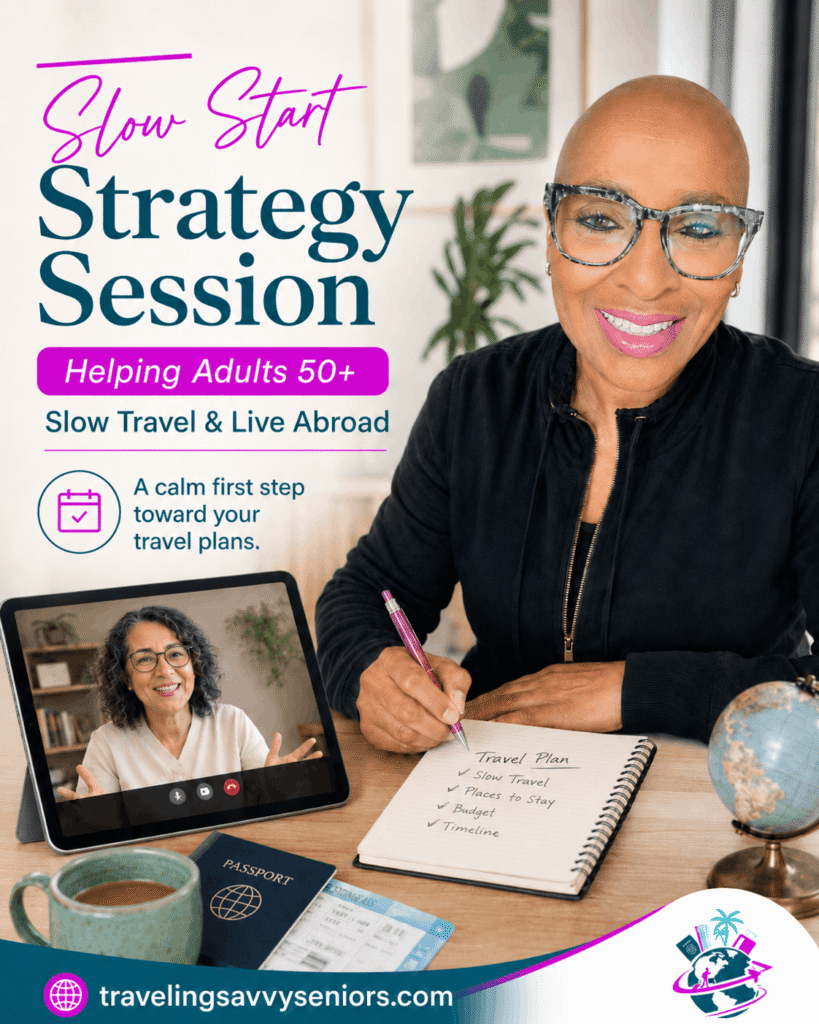
If you’d like help organizing those questions and exploring your options, our Slow Start Strategy Session can help you identify what to research and confirm next, at a pace that feels manageable.