Most packing lists for seniors are written for a two-week vacation. But a slow travel packing list for seniors who plan to stay abroad for weeks or months needs to do much more.
Slow travel is a different animal.
When you’re not visiting a place but living in it for weeks or months at a time, your suitcase has to work harder. It has to survive humidity, motorbike taxis, hand-washing in a hotel sink, uneven sidewalks, and the slow realization that you packed three things you’ll never touch and forgot the one thing you actually needed.
Almost two years of trial, error, and repacking—through Da Nang, Hanoi, Ho Chi Minh City, Da Lat, and Vung Tau in Vietnam, as well as Chiang Mai, Kuala Lumpur, and Cambodia—has taught me more about what truly belongs in a suitcase than any vacation ever could.
A long-term travel packing list has to account for laundry, health needs, changing climates, and the realities of moving between destinations.
Before you decide what fits, ask a more important question: Can you manage the packed bag by yourself?
If you’re still deciding which suitcase will be easiest to lift, roll, and manage, start with my guide to choosing the best lightweight luggage for seniors. The right bag can make everything that follows—from airport connections to uneven sidewalks—much easier.
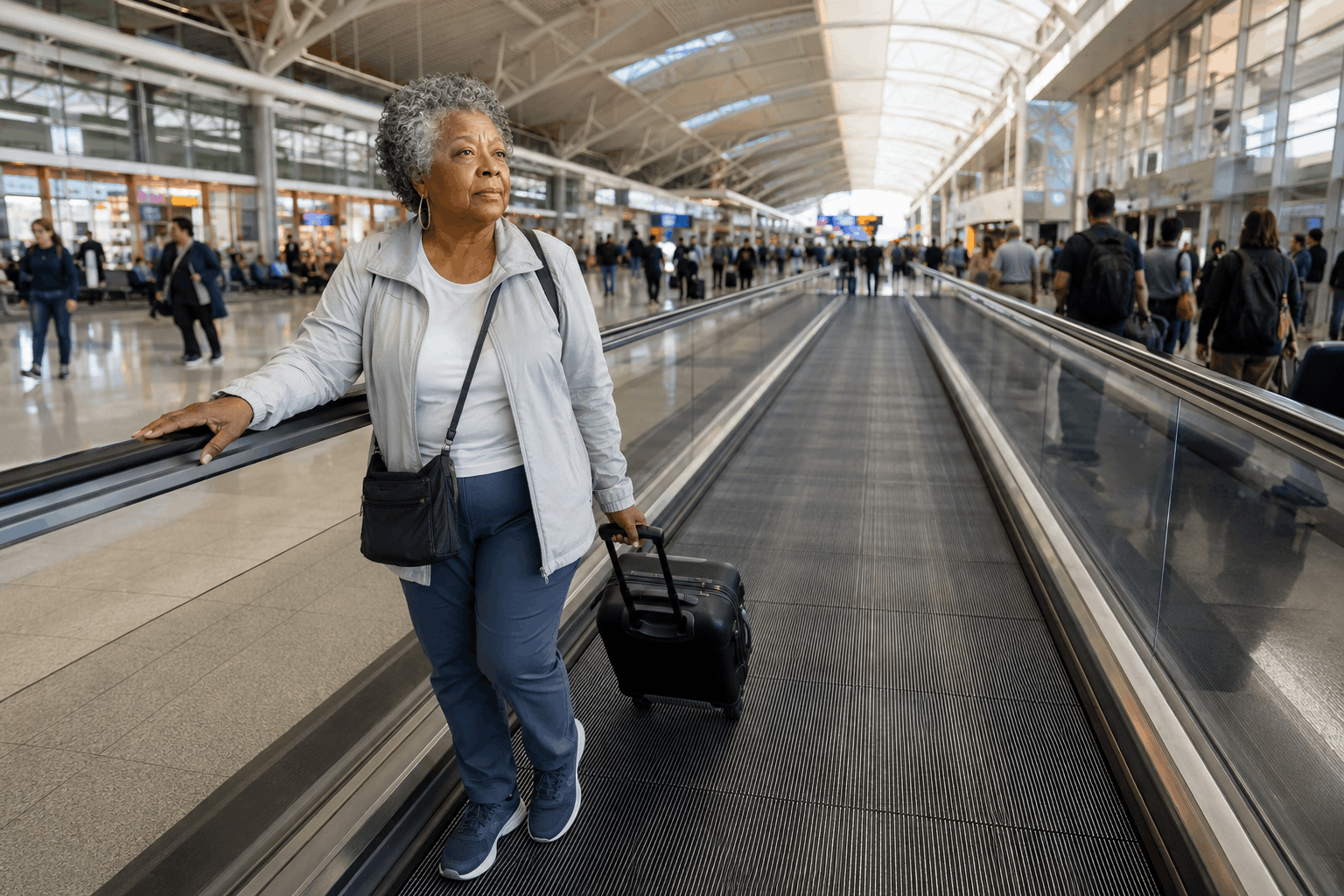
Can you lift it over a curb, pull it across rough pavement, load it into a taxi, or carry it up a flight of stairs if the elevator is out? Pack for the body you have now, not the strength you hope will appear at the airport.
A good test is to pack your bag, weigh it, roll it around for several minutes, and lift it onto a bed. If that feels unsafe or exhausting, something needs to come out.
How This Slow Travel Packing List for Seniors Works
Here’s what actually earned its place, organized using the LIGHT framework:
Layerable – clothing that mixes and matches across climates
Indispensable – the non-negotiables you’ll actually use
Go-Anywhere – gear that holds up in cities and rural areas alike
Health-Ready – medication, documents, and wellness essentials
Tech-Light – just enough tech, nothing you’ll regret carrying
Layerable: Build a Climate-Flexible Wardrobe
Slow travel rarely stays in one climate. I’ve gone from Da Lat’s cool mountain evenings to Vung Tau’s relentless coastal heat in the same month.
What works:
- 3–4 lightweight, quick-dry tops in a similar color family, so everything mixes
- One packable layer—a thin cardigan or zip-up, not a bulky sweater
- Breathable pants that aren’t shorts—useful for temples, pagodas, and modesty norms across Southeast Asia
- A light rain shell—monsoon season doesn’t ask permission
Skip the “just in case” outfit. If you haven’t worn it in two destinations, it isn’t earning its space.
Packing cubes can help keep a small wardrobe organized, but remember: they reduce bulk, not weight. It is easy to compress more clothing into a bag than you can comfortably lift.
Indispensable: The Non-Negotiables
These are the items I’ve replaced, repaired, or refused to travel without:
- An RFID-blocking daypack with a zippered, body-facing pocket for passports, cash, and other valuables in crowded areas
- A universal travel adapter for charging devices abroad
- A lightweight, washable bag for damp or dirty clothing
- A foldable reusable grocery bag for shopping and everyday errands
- A microfiber towel that dries quickly in humid climates and takes up very little space
- A portable doorstop alarm or sturdy safety doorstop for added security in hotels and rental accommodations
What Never Leaves My Personal Item
Keep your passport, medications, wallet, phone, glasses, essential medical supplies, charging cable, insurance information, and one change of underwear and clothing in the bag that stays with you.
Go-Anywhere: Gear That Holds Up
This is where most generic packing lists fall apart, because they’re written for airports and hotel lobbies—not sidewalks that double as motorbike parking and roads that flood in an afternoon storm.
What’s held up for me:
- A lightweight, water-resistant daypack—not the cute leather one, the one that survives a sudden downpour
- Grippy, closed-toe walking shoes—sidewalks abroad are uneven, and sandals don’t protect against the unexpected
- An RFID-blocking cross-body bag with a secure zip—easier on the hands and shoulders than a handbag and harder to pickpocket
- A compact umbrella that actually fits inside your daypack—not the golf umbrella you’ll abandon at the first hotel
If you’re deciding between checked luggage and a slow-travel-sized carry-on, that decision shapes everything else you pack.
Before making that decision, compare the features that matter most in my guide to the best luggage for seniors, including weight, wheels, handles, and ease of use.
Do not check only the bag’s dimensions. Some international and regional airlines also weigh cabin luggage, and the allowance may be lower than you expect. Check every airline on your itinerary, including connecting flights, and weigh the bag after packing it.
A lightweight suitcase gives you more usable weight for what goes inside.
The right luggage choice depends on how long you’re staying, how often you’ll move, and what you can physically handle without help.
Health-Ready: Packing Essentials for Slow Travel Seniors
This is the category where a vacation mindset gets people into trouble. A missing item on a two-week trip is an inconvenience. A missing item three months into slow travel can become a real problem.
Bring:
- Enough medication for the permitted period, plus a realistic refill plan
- Medication in its original labeled packaging, packed in your carry-on
- A written list of each medication’s generic name, dosage, and purpose
- Copies of prescriptions and your doctor’s contact information—digital and printed
- A small first-aid kit with basics such as antidiarrheal medication, antiseptic, blister care, and any personal essentials
- Backups for difficult-to-replace items such as prescription glasses, hearing-aid supplies, CPAP accessories, dental appliances, or specialized medical products
- Travel insurance that actually covers long stays—many vacation policies end far sooner than slow travelers realize
Check the medication rules for your destination and any countries you will pass through customs in. A medication commonly used in the United States may be restricted elsewhere.
Do not assume you can mail medicine from home or find the exact same product at a foreign pharmacy. Brand names, strengths, formulations, availability, and local rules can differ.
This is the gap I see most often: people plan the destination but not the health logistics. It’s a core part of a Slow Start Strategy Session—sorting out the unglamorous-but-essential details before something goes wrong.
Tech-Light: Enough, Not Everything
You don’t need a tech bag that looks like a carry-on cockpit. You need a few things that work reliably and don’t weigh you down.
- An unlocked phone with an eSIM—Airalo has been the simplest way I’ve found to get connected when landing in a new country without hunting for a SIM shop
- A reputable universal plug adapter—and confirmation that your devices support the destination’s voltage. An adapter changes the plug shape; it does not automatically convert voltage
- A portable charger—for the days when outlets are scarce or the power flickers
- One e-reader, not five paperbacks—your back will thank you
- An optional luggage tracker if you check a bag or frequently use trains, buses, or shared transportation
Create a secure digital folder containing copies of your passport, visa, insurance information, prescriptions, emergency contacts, and important reservations. Keep one printed backup as well.
That’s the full kit. No 40-item spreadsheet, no “just in case” pile.
What I Left Behind—and Don’t Miss
Almost as useful as what to pack is what to leave home:
- Multiple pairs of shoes “for different occasions”
- A hairdryer—many accommodations have one, and some U.S. hair appliances are not suitable for overseas voltage
- Full-size everyday toiletries—you can buy most items after arrival
- A second daypack “just in case”
The exception is anything prescription, allergy-safe, or difficult to replace, including specific dental, skincare, or hair-care products.
Every slow traveler overpacks once. The goal is to only do it once.
The Real Difference Between Packing for a Trip and Packing for a Life
A vacation packing list is about getting through two weeks. A slow-travel packing list is about building a kit you can actually live with—one that holds up to laundry day, weather changes, health needs, and the realization that you’re not visiting anymore—you’re staying.
If you’re still in the “is this even possible for me?” stage, that’s a normal place to start. The Slow Start Strategy Session is built for exactly that point—before the suitcase, before the flights, while you’re still mapping out what slow travel could look like for you.
And if you already have a destination in mind and want the on-the-ground specifics, the Know Before You Go Report goes deeper into logistics like this, tailored to where you’re actually headed.
The best slow travel packing list for seniors is not the longest one—it is the one you can safely manage and comfortably live with.
Pack light. Pack smart. Leave room for the things you’ll pick up along the way.