Thinking about living overseas? Here’s the smart way to test life abroad before you move.
You’ve been thinking about it. Maybe for months. Maybe longer.
The idea of living somewhere warm, affordable, and full of life — without the pressure and pace you’ve grown tired of — sounds wonderful. But then the fear creeps in.
What if I hate it? What if I sell everything and realize I made a mistake? What if I get there and feel completely overwhelmed?
Here’s what I want you to hear: you do not have to sell everything to find out if life abroad is right for you.
You can test it first.
I’m writing this from Vung Tau, Vietnam, where I’ve been slow traveling for more than 16 months. My own journey started with research, a big leap of faith, and yes — selling everything before I fully knew how this new life would unfold.
But that was my story. It does not have to be yours.
That’s why I now encourage adults 50+ to test life abroad before making permanent decisions. A test stay gives you time to see how daily life feels, what works for your budget, how your body responds, and whether the destination truly fits your comfort level and personality.
Why You Should Test Life Abroad Before You Move After 50
A vacation tells you how a place treats tourists.
A test stay tells you how a place may treat you as a temporary resident.
Those are two very different experiences.
On vacation, you eat out, take tours, stay in a hotel, and enjoy the highlights. During a test stay, you do the ordinary things. You buy groceries. You find the pharmacy. You learn how transportation works. You figure out whether the neighborhood feels comfortable in the morning, afternoon, and evening.
Many experienced expats and relocation advisors recommend testing a destination for at least 30 days, and 60 to 90 days is even better if your visa, budget, and schedule allow. That gives you enough time to move beyond the vacation feeling and experience real daily life.
You do not need to decide your whole future in one trip. The goal is simply to gather real information before making a bigger decision.
Where to Stay While You Test Life Abroad Before You Move
One of the biggest mistakes people make during a test stay is staying in a hotel the whole time.
A hotel keeps you in tourist mode. You are not cooking your own meals, managing laundry, testing the internet, walking to a local market, or seeing what the neighborhood feels like when the excitement wears off.
For a real test stay, consider renting a furnished apartment for at least a few weeks. It does not have to be fancy. In fact, it should be realistic. You want to know what daily life might actually feel like if you returned for a longer stay.
Pay attention to the details:
Is there an elevator?
Are there too many stairs?
Is the shower easy to step into?
Is the bed comfortable?
Is the kitchen practical?
Is the Wi-Fi reliable?
Can you walk to groceries, coffee, a pharmacy, or an ATM?
Do not just choose the prettiest apartment online. Choose one that helps you test the kind of life you may actually want to live.
Do Not Turn Your Test Stay Into a Sprint
If you are serious about testing life abroad, resist the urge to hop from city to city every few days.
That may be fun for sightseeing, but it will not tell you much about living there.
Choose one city, and ideally one neighborhood, long enough to experience its rhythm. You need time to notice the small things: where people shop, how loud the streets get, how easy it is to rest, how safe you feel walking alone, and whether your body feels comfortable there.
Slow travel is not about seeing everything. It is about paying attention.
What to Pay Attention to During Your Test Stay
This is where your trial run becomes valuable. Instead of spending the whole time sightseeing, use part of the stay to answer the questions that matter for real life.
Health and safety: Where is the nearest clinic, hospital, or pharmacy? How would you get there in an emergency? Can you refill or legally bring enough of your regular medications? Do you know the generic names of your prescriptions? Do you understand what your travel or expat insurance will and will not cover?
Mobility comfort: Are the sidewalks manageable? Are the streets hilly, crowded, broken, or hard to cross? Are there elevators when needed? Can you get through an ordinary day without exhausting your body?
Daily life logistics: Can you eat well on your budget? Is the internet reliable? Can you get around without a car? Are groceries, laundry, coffee shops, and basic services easy to reach?
Money access: Are ATMs nearby? Do your cards work internationally? What are the fees? Do you have a backup card or another way to access money if your main card gets blocked?
Visa reality: How long can you legally stay? What happens after 30, 60, or 90 days? Would you need to apply for a longer visa, leave and re-enter, or choose a different destination?
Connection: Does being there feel isolating, or does connection feel possible? Is there an expat community, walking group, church, language exchange, coffee shop, wellness class, or local space where you could meet people?
The gut check: How do you feel on a boring Tuesday? Not a tour day. Not a market day. Just a regular day. Are you counting down the days to go home, or are you already wondering what it would feel like to stay longer?
That last question tells you a lot.
How to Structure Your 90-Days While You Test Life Abroad Before You Move
If you have the time and your visa allows it, a 90-day test stay can give you a much clearer picture than a short vacation.
Weeks 1–2: Everything is new. You may feel excited, nervous, or overstimulated. Do not make big decisions during this phase.
Weeks 3–6: The shine starts to wear off, and that is a good thing. You begin to notice what feels easy and what feels frustrating.
Weeks 7–12: You start developing routines. You know your favorite coffee spot. You know which streets feel comfortable. You know whether the weather, noise, food, transportation, and pace of life are working for you.
If you are smiling more often than not during those later weeks, pay attention.
What to Do Before You Leave Home
You do not need to make permanent decisions before a test stay, but you do need a practical plan.
Before leaving, make sure you have copies of your passport, visa, travel insurance information, and emergency contacts. Set up online access to your bank, Social Security account, and important bills. Bring a backup debit or credit card. Know how your phone plan or eSIM will work. Make a plan for your mail, home, pets, car, and belongings.
You may decide to keep your lease, ask someone to check your home, put some items in storage, or simply travel light for the first test. The point is not to dismantle your life before you have real answers.
Let your current life remain stable while you explore what may come next.
What a Test Stay Can Teach You
A good test stay does not always lead to a permanent move, and that is okay.
Some people come home and say, “That was wonderful, but I am happy to return.” That is still a successful test. You answered the question without risking everything.
Others come home and think, “I want to go back, but longer next time.” That is useful information too.
The best part is that either way, you are no longer making decisions from fear or fantasy. You are making them from experience.
Ready to Go Deeper?
If you want to test life abroad before you move, start with a plan that helps you look at your budget, health needs, comfort level, and destination fit before you commit.
Download the free Moving Abroad Readiness Guide to think through where you stand financially, logistically, emotionally, and practically.
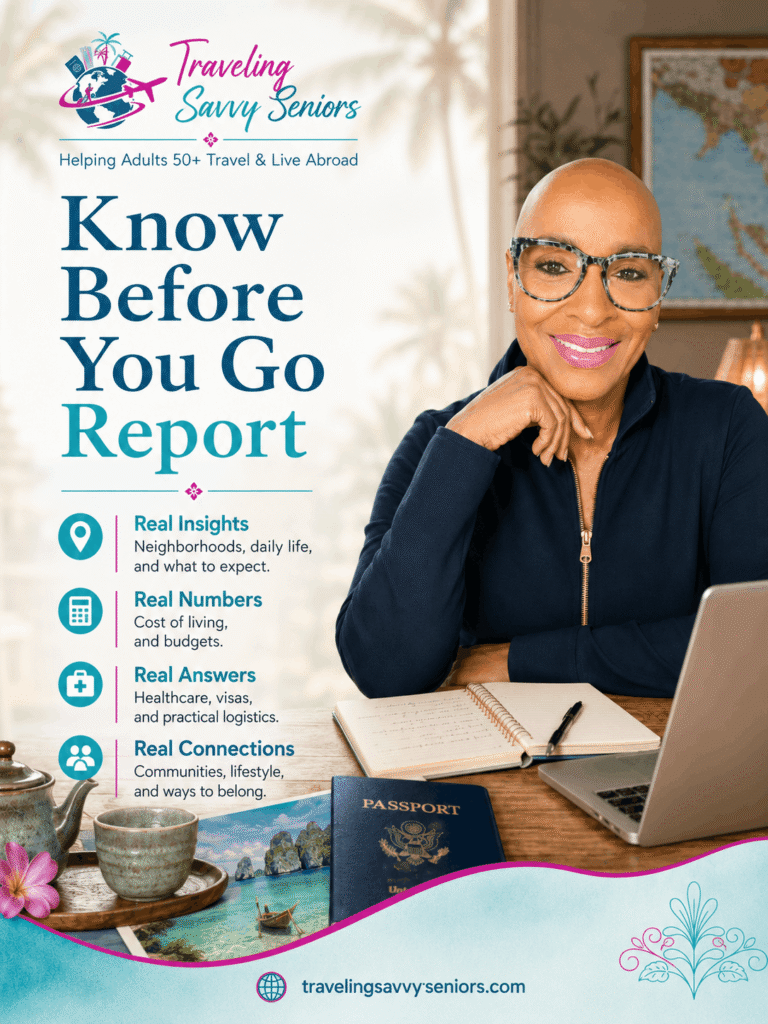
If you already have a destination in mind, explore the Know Before You Go Report, a personalized deep-dive into cost of living, neighborhoods, healthcare, visa considerations, and what daily life may actually feel like.
And if you want help sorting through your options before you spend money on flights or housing, book a Slow Start Strategy Session. It is designed to help adults 50+ think through the first steps of testing life abroad in a slower, calmer, more realistic way.
You do not have to sell everything to begin.
You only have to take the next wise step.