Are Americans welcome abroad in 2026? If you have been watching the news lately, you may be wondering whether it is even worth leaving the country right now.
With headlines about political tensions, State Department warnings, airspace closures, and anti-American sentiment, many travelers over 50 are quietly wondering whether it is still worth leaving the country.
I get it. The noise is loud.
But here is what I am actually seeing from the ground in Southeast Asia, where I have been living and slow traveling for the past 16 months.
For a broader look at travel advisories, preparation, and whether Americans should still travel internationally this year, read our earlier guide,
What the Headlines Are Getting Right
Let me be honest first, because you deserve that.
The international travel environment has become more complicated. On March 22, 2026, the U.S. Department of State issued a Worldwide Caution, advising Americans worldwide—and especially those in the Middle East—to exercise increased caution.
The notice also warned that periodic airspace closures could cause travel disruptions and that U.S. diplomatic facilities and other locations associated with American interests could be targeted.
These are not invented concerns.
Political tensions can affect travelers even when they are not visiting a conflict area. Flights may be rerouted, connections may be missed, security procedures may increase, and airline schedules may change with little notice.
A traveler heading to Europe or Asia could still be affected by a disruption involving a transit airport or the airspace an airline normally uses. That is why it is important to research your entire route, not only your final destination.
But a Worldwide Caution does not mean the entire world has been classified as unsafe for Americans. It is an additional global security notice. Every destination still has its own individual travel advisory, risks, and regional conditions.
Are Americans Welcome Abroad in 2026? What the Headlines Miss
When people ask whether Americans are welcome abroad in 2026, I remind them that political headlines and everyday interactions do not always tell the same story.
Here is what does not always make the news: most daily interactions abroad are not political.
I have been living in Vietnam for months. Before that, I spent six months in Thailand and also stayed in Malaysia. Across hundreds of interactions with local residents, shopkeepers, landlords, doctors, restaurant workers, drivers, and neighbors, I have not personally felt unwelcome because I am American.
Not once.
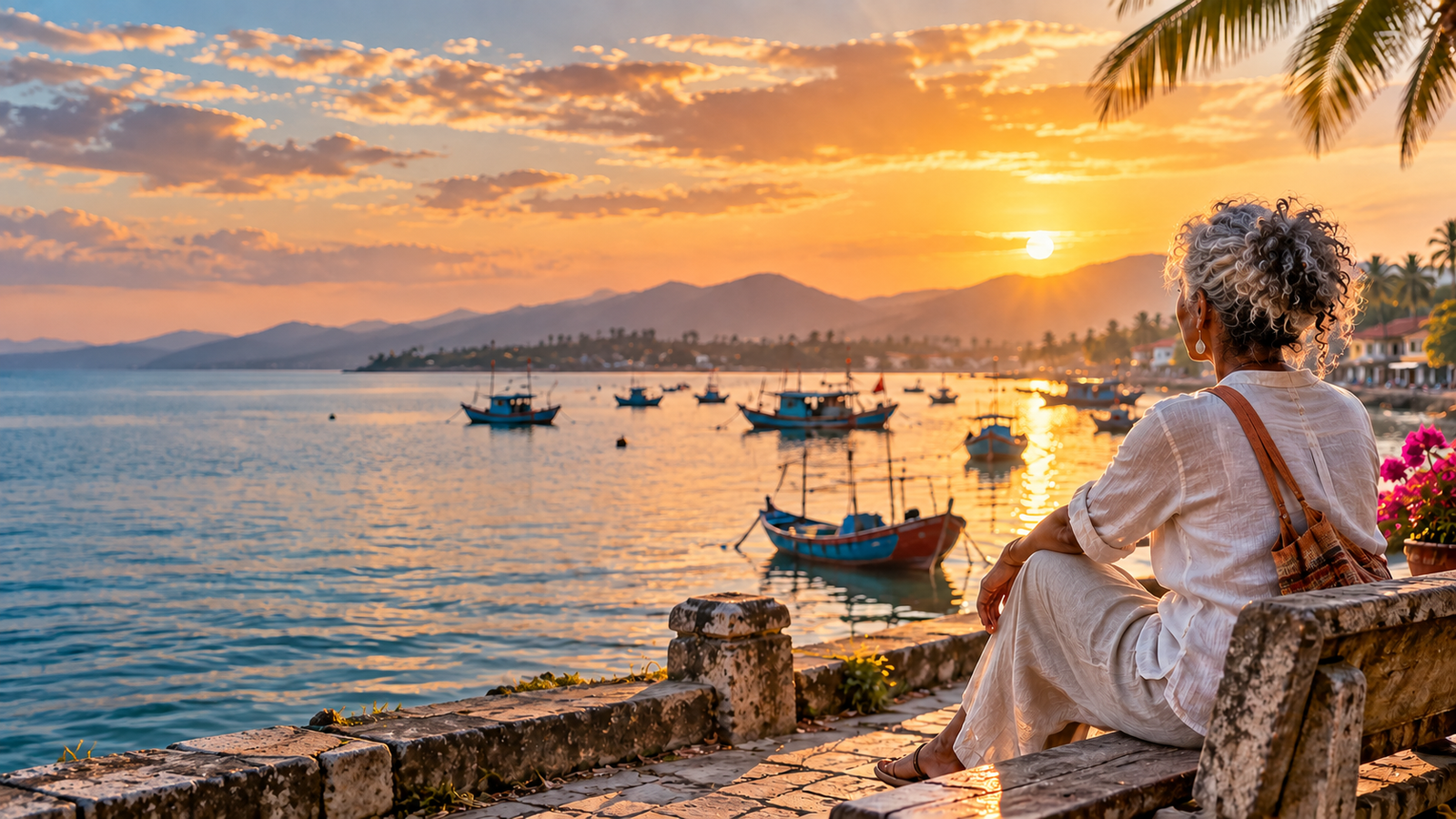
What I encounter daily in Vung Tau, where I currently live, is curiosity, warmth, and genuine interest in where I am from and what brought me here.
The Vietnamese people I have met often have thoughtful and complicated perspectives on Americans. Those perspectives are rooted in a history many of us do not fully understand until we arrive, listen, and allow people to tell their own stories.
My experiences in Thailand and Malaysia were also overwhelmingly positive.
That does not mean every American will have the same experience in every neighborhood or every country. It does mean that dramatic headlines do not tell the complete story of how ordinary people interact with American visitors.
There is also an important difference between encountering political disagreement and being in physical danger. Someone may disagree with U.S. policies without disliking an individual American standing in front of them.
What Has Changed for American Travelers in 2026
The world has not closed its doors to Americans. It has, however, become more complicated in several ways worth understanding.
Air Travel Disruptions Are a Real Concern
Airspace closures and regional conflicts can cause ripple effects far beyond the location where the problem began. Flights may be canceled, diverted, delayed, or forced to take longer routes.
For adults over 50, a disruption can be more than an inconvenience. It may mean missing medication, standing in long lines, sleeping in an airport, managing mobility challenges, or paying unexpectedly for a hotel and a replacement flight.
Build some flexibility into your itinerary. Avoid unnecessarily tight international connections, keep essential medication and medical supplies in your personal item, and carry enough necessities to manage at least a few unplanned days.
It is also wise to examine your connecting airport. A destination may be operating normally while the route to it is unstable.
Travel Advisories Require More Than a Quick Glance
Before booking, check the destination’s complete U.S. State Department Travel Advisory.
The advisory system has four levels:
Level 1: Exercise normal precautions
Level 2: Exercise increased caution
Level 3: Reconsider travel
Level 4: Do not travel
Do not stop after reading the number.
A country may have one overall advisory level, while certain borders, provinces, or regions carry a much higher warning level. In some destinations, the most serious concern may be limited to an area hundreds of miles from the city you plan to visit.
Read the explanation behind the advisory. Look for information about crime, civil unrest, terrorism, health risks, wrongful detention, kidnapping, limited embassy assistance, and specific areas travelers are advised to avoid.
Conditions can also change between the day you book and the day you leave, so check again shortly before departure.
Europe Is More Nuanced Than the Headlines Suggest
Europe should not be treated as a single destination with a single attitude toward Americans.
A political protest in one major city does not automatically represent an entire country. Likewise, an unpleasant interaction reported online does not prove that American travelers are being broadly targeted.
Some Americans may encounter political questions, criticism of U.S. policies, stricter border procedures, or a less enthusiastic reception than they expected. Most will still make their trips without becoming targets of hostility.
The better approach is not to label whole countries as friendly or unfriendly. Research the specific destination, pay attention to local events, avoid political demonstrations, and remember that local attitudes can vary by city, neighborhood, generation, and individual.
Safety Means More Than Whether People Like Americans
For older travelers, safety is not only about political sentiment.
A country can be welcoming to Americans and still be difficult for someone managing limited mobility, extreme heat, poor air quality, chronic illness, traffic hazards, or a lack of nearby medical care.
Before deciding that a destination is safe for you, consider:
- How far you will be from an appropriate hospital or clinic.
- Whether English-speaking medical care is available.
- Whether the neighborhood has safe sidewalks and transportation.
- Whether the climate could aggravate your health conditions.
- Whether you could manage an unexpected flight cancellation.
- Whether your insurance covers the full length and type of trip you are taking.
- Whether you have enough medication and emergency funds.
That is the question I want more adults over 50 to ask—not only, “Is this country safe?” but “Is this particular destination, neighborhood, route, and travel plan safe for me?”
Travel Insurance Matters More Than Ever
Travel medical insurance is especially important for older Americans.
Original Medicare generally provides very limited coverage outside the United States. Some Medigap policies may cover certain foreign emergency care, and some Medicare Advantage plans offer limited international benefits, but travelers should verify their individual coverage directly with their plan.
Do not assume your regular health insurance will pay for treatment abroad.
Also check whether the travel insurance you are considering covers:
- Pre-existing medical conditions.
- The full duration of your trip.
- Emergency hospitalization.
- Trip interruption and extended delays.
- Medical evacuation.
- Repatriation.
- The countries and regions on your itinerary.
Medical evacuation coverage is valuable, but read the wording carefully. Evacuation may mean transportation to the nearest facility considered medically appropriate—not necessarily an air ambulance back to the United States.
Where I Would Point You Right Now
If you have been on the fence about international travel in 2026, here is my honest assessment after 16 months of living it.
Vietnam, Thailand, and Malaysia can still be welcoming choices for older American travelers. Major cities in these countries offer respected private hospitals, affordable transportation, diverse accommodation options, and communities accustomed to international visitors.
However, healthcare access, affordability, walkability, traffic, and English proficiency vary considerably across cities and neighborhoods. Research the exact place where you plan to stay rather than relying on a general statement about an entire country.
Portugal, Greece, and parts of Latin America may also appeal to travelers seeking alternatives, but the same rule applies: evaluate the specific location, current advisories, transportation routes, healthcare access, and your individual needs.
The important shift is not that Americans must stop traveling. We need to travel with greater awareness.
That means respecting local culture, avoiding demonstrations, paying attention to changing conditions, understanding local laws, and recognizing that something considered ordinary or protected in the United States may be viewed differently abroad.
You do not have to hide the fact that you are American. You do need to remember that you are a guest.
So, Are Americans Welcome Abroad in 2026?
So, are Americans welcome abroad in 2026? Based on my experience in Vietnam, Thailand, and Malaysia, the answer has been yes—but thoughtful preparation still matters.
For many destinations, with reasonable preparation, yes.
Is international travel exactly the same as it was five years ago? No.
Does that mean you should cancel your plans based only on a frightening headline? Absolutely not.
Older Americans are not abandoning international travel. Many are simply becoming more careful about where they go, how they book, what insurance they purchase, and how they prepare for possible disruptions.
I left the United States sixteen months ago with a one-way ticket and a willingness to figure things out as I went. What I found was a world that is more complicated than the headlines suggest—and often more welcoming than fear suggests.
The answer is not to ignore what is happening. The answer is to separate a broad warning from your specific destination, route, health needs, and personal risk.
You do not need a fearless travel plan.
You need an informed one.
Thinking about slow travel or living abroad, but not sure where to start? Download the free Moving Abroad Readiness Guide, or let’s explore the Slow Start Strategy Session together to find a destination that fits your pace, budget, health needs, and life.