Vietnam travel after 50 can make an impression before you have even unpacked. A bowl of steaming pho, a tiny coffee shop tucked along a busy street, the sound of scooters moving in every direction, and the sight of the sea opening up at the end of a coastal road can all become part of your first memories here.
For many adults over 50, Vietnam offers the kind of experience that makes you want to slow down and stay awhile. You can spend a morning exploring a market, take a quiet break in a café, walk along the water, or simply watch the neighborhood come to life. There is history, beautiful scenery, regional food, and everyday culture to discover. And because the country is long and varied, a stay in Hanoi feels different from a stay in Da Nang, Ho Chi Minh City, Da Lat, or Vung Tau.
But arriving in a new country can also be tiring. You may be excited and ready to explore, yet still need to figure out your phone, money, transportation, groceries, and the layout of your neighborhood. When all of those small tasks land on the same day, even a wonderful destination can feel overwhelming.
That is why your first week deserves a little breathing room.
Vietnam Travel After 50 Is More Than a Checklist of Attractions
A trip to Vietnam does not have to mean racing from one famous sight to the next. One of the pleasures of spending more time here is getting to know the ordinary rhythm of a place: the café you return to, the market where you learn what to buy, the familiar route to the beach or park, and the small routines that help a destination begin to feel less foreign.
A slower visit can be especially appealing if you want time to rest between outings, get comfortable with local transportation, or see whether a place might suit a longer stay. You can take your time learning how a neighborhood works instead of trying to absorb everything in a few days.
Vietnam also rewards curiosity. You might try a new dish, visit a temple or museum, listen to the sounds of a busy street from a shaded café, or take a short ride to a quieter stretch of coastline. Experiences vary from city to city, and from one neighborhood to the next. The best fit depends on what matters to you: walkability, quieter evenings, access to a beach, familiar comforts, health services, or a lively local atmosphere.
That variety is part of the appeal. It is also why it helps to settle in before making big decisions about where to stay or what to do next.
Before You Book, Know What Matters Most
A calmer first week often begins before you ever book your flight.
For some travelers, Vietnam is simply a long-awaited vacation. For others, it may be the first step in deciding whether a particular city or neighborhood could work for a longer stay. Either way, it helps to think beyond the photos of a beautiful apartment, a beach view, or a popular tourist district.
Before booking, consider the details that can shape your comfort every day:
– Is the neighborhood easy to get around by foot, taxi, or ride-hailing service?
– Are sidewalks uneven, crowded, steep, or difficult to navigate?
– Does the hotel, apartment, or rental have an elevator, a walk-in shower, handrails, or too many stairs?
– How close are pharmacies, groceries, clinics, hospitals, cafés, and everyday services?
– Is the area peaceful at night, or is it affected by traffic, construction, karaoke, bars, or early-morning street activity?
– Does the destination match your preferred pace: lively city, beach community, cooler mountain setting, or quieter residential neighborhood?
– Are you comfortable with the local transportation options and the distance from airports, hospitals, and practical services?
Vietnam can be a wonderful place to visit, but the experience can be very different from one neighborhood to the next. Larger cities and newer hotels may offer more elevators, ramps, wider doors, and other accessible features, but accessibility is not consistent everywhere. It is always wise to ask direct questions, request current photos, and confirm the details that matter to you before booking.
If you are considering a move, extended stay, or rental commitment, those answers can make the difference between a stressful arrival and a much softer landing.
When You Need Eyes-On Answers
Sometimes online research is enough. Other times, you need someone to look at a place through your eyes before you spend money on flights, temporary lodging, or a lease.
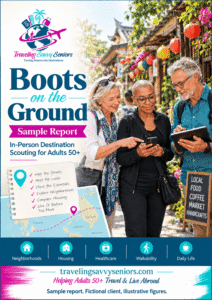
That is where our **Boots on the Ground Reporting** service can help.
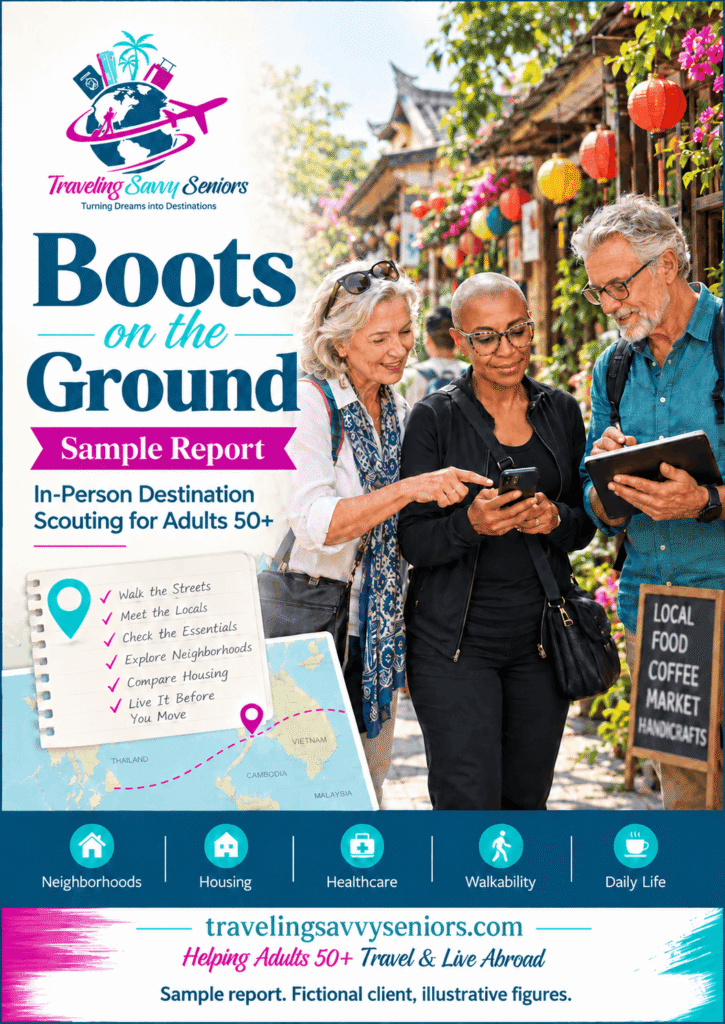
Boots on the Ground is a personalized, in-person destination scouting visit for adults 50+ who are seriously considering a specific location in Vietnam, Thailand, or Malaysia. We visit the destination on your behalf and assess it through a senior lens—not as a tourist passing through.
Before the visit, we talk about your priorities, lifestyle, budget, timeline, mobility needs, health concerns, and the questions you want answered. Then we visit the area and look at the real-life details that are difficult to judge from listings, travel videos, or online reviews.
Your report can include firsthand observations about:
– Neighborhood character, noise levels, traffic, safety, and daily rhythm
– Housing options, building access, stairs, elevators, and practical comfort
– Walkability, street conditions, transportation, and mobility considerations
– Markets, pharmacies, cafés, grocery stores, and daily-life essentials
– Healthcare access and proximity to clinics or hospitals
– Cost-of-living considerations, expat presence, and honest observations about the area
– A recorded video walkthrough, detailed written findings, and a follow-up debrief conversation
This service is especially helpful if you have identified a destination but want more confidence before making a major commitment. Each visit is tailored to the destination and your personal concerns, rather than following a one-size-fits-all checklist.
You may not need Boots on the Ground Reporting for a short two-week vacation. But if you are wondering, “Could I really live here?” or “Would this neighborhood work for my mobility, budget, health needs, and preferred lifestyle?” having someone check in person can replace a great deal of uncertainty with useful, real-world information.
The First week in Vietnam Can Feel Like a Lot
After a long flight, you may be tired, hungry, and ready to get to your accommodation. Yet you still have practical questions to answer. Is your phone connected? How will you get from the airport to your lodging? Where can you withdraw cash? Which ride option should you use? Where is the nearest pharmacy or clinic? How do you find groceries when the labels are unfamiliar?
Each question is manageable on its own. Facing all of them while jet-lagged can make your first day harder than it needs to be.
I know because I have had to learn these routines by arriving and figuring things out in real time. My own stays have included Da Nang, Hanoi, Ho Chi Minh City, Da Lat, Vung Tau, and Chiang Mai in Thailand. Every arrival taught me something about what is useful to know before landing—and what can wait until tomorrow.
The key is not to squeeze more into your first week. It is to give the important tasks a sensible order, with time to rest and notice how you are feeling.
A comfortable arrival also means preparing for the practical things that can matter more as we get older: bringing prescription medication in its original labeled containers, carrying a written medication list, keeping travel-insurance information available, and knowing how to reach your accommodation, an emergency contact, and a nearby clinic if needed. Medical care overseas is generally not covered by U.S. Medicare, so travel insurance and advance planning are especially important.
A Seven-Day Plan That Leaves Room to Settle In
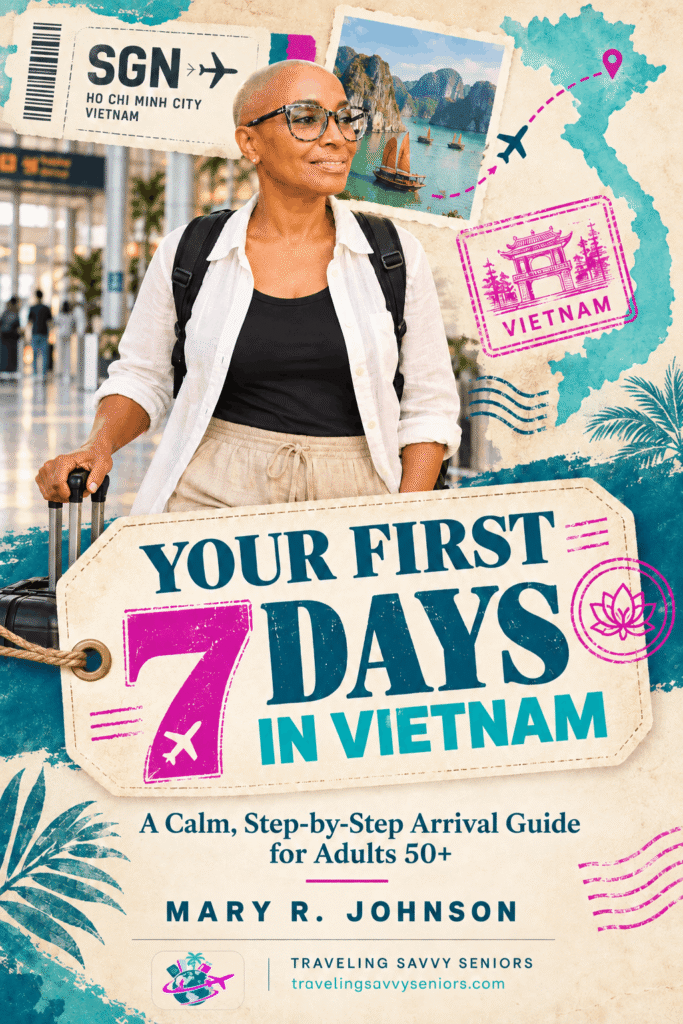
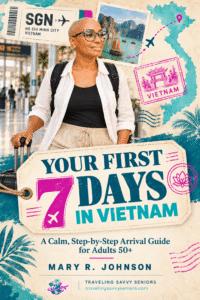
My guide, *Your First 7 Days in Vietnam: A Calm, Step-by-Step Arrival Guide for Adults 50+*, organizes your arrival around one main focus each day. It is designed for travelers 50+ who want to start confidently, whether Vietnam is a first visit, a solo trip, or the beginning of a longer stay.
Before you fly, the guide helps you review practical preparations such as your travel documents, eSIM, offline maps, first nights of lodging, and a little arrival cash. Entry requirements can change, so always confirm your visa requirements, approved entry point, and document details through Vietnam’s official National Electronic Visa System at evisa.gov.vn for your own travel dates. Vietnam’s e-visa system provides entry permission only when your application details, visa approval, and designated arrival point are correct.
Be sure to use the official government website rather than a third-party visa service, and print or save a copy of your approved e-visa before travel. The official portal states that approved e-visas should be printed for entry and exit.
Once you land, the week moves through the essentials in a manageable order:
**Day 1: Arrive and get to bed.** Focus on getting through the airport, connecting your phone, and reaching your accommodation. The first day is for landing, not proving how much sightseeing you can do. Consider a reputable ride-hailing option or a pre-arranged hotel transfer so you do not have to make rushed transportation decisions while tired.
**Day 2: Money and connectivity.** Get oriented to cash, ATMs, card use, and how to keep payment options available.
**Day 3: Getting around.** Learn how to use ride-hailing, share or show your accommodation’s map pin and address, and approach street crossings with more confidence.
**Day 4: Food, groceries, and pharmacies.** Try a first market or supermarket visit, use translation tools, and locate everyday essentials.
**Day 5: Get to know your neighborhood.** Find the practical places you may use regularly, such as a clinic, pharmacy, laundry, café, grocery store, and a quiet place to rest.
**Day 6: Check a longer rental in person.** If you are considering an extended stay, learn what to look at, what questions to ask, and how to document the condition of a rental. Pay attention to steps, elevators, bathroom setup, water pressure, street noise, and the distance to the services you will use most.
**Day 7: Rest and plan your first month.** Check in with your energy, comfort, and budget, then make a simple plan for the next few weeks.
The purpose is to help you make the first week feel more manageable, not to prescribe the same pace or choices for every traveler. You can adapt the plan to your arrival time, health needs, mobility, and energy level.
A Practical Vietnam Arrival Guide, Grounded in First Hand Experience
This 29-page PDF is based on my own experiences arriving in several Vietnamese cities and learning the details that make a first week easier. It is written for travel across Vietnam, with notes where city differences matter. You can read it on a phone, tablet, or computer, or print it before you go.
The guide also includes the bonus **10 First-Week Mistakes in Vietnam**, with a simple fix for each, plus a printable first-week toolkit with a pre-flight checklist, emergency card, and rental inspection checklist. These tools help you prepare, keep key details close, and avoid having to remember everything at once.
Use the emergency card to keep important information together, including your accommodation address in English and Vietnamese, emergency contact details, medical information or allergies, insurance details, and the location of a nearby clinic or hospital.
The guide is useful even if you are visiting for only a couple of weeks. The early days cover arrival routines that can help on a shorter trip, while the rental and first-month sections are most useful if you are considering a stay of a month or longer.
It is not a sightseeing itinerary. Think of it as the foundation that helps you get settled so you can enjoy the sights, food, and experiences that drew you to Vietnam in the first place.
You Do Not Have to Figure Everything Out on Day One
A good start in Vietnam does not require knowing every app, phrase, route, or restaurant before you arrive. It means having the essentials ready, giving yourself time to rest, and taking the next useful step when you are ready.
If you are planning a Vietnam trip after 50, imagine beginning with a calm first evening, a few manageable errands, and time to learn your surroundings at your own pace. That kind of start can make it easier to enjoy the country and decide what you want from the days ahead.
And if you are still deciding whether a particular Vietnamese city or neighborhood is right for a longer stay, you do not have to make that decision based only on photos and online listings. **Boots on the Ground Reporting** offers a personal, on-location assessment tailored to the questions that matter most to you, from healthcare and mobility to housing, noise, safety, walkability, and daily-life convenience.
You can explore the guide details and get your copy here: **Your First 7 Days in Vietnam**. Read it before your flight, keep it handy during your first week, and let your arrival unfold one day at a time.
If you are considering a larger decision and would like eyes-on reporting before you book a flight or sign a lease, learn more about **Boots on the Ground Reporting**.