There’s a conversation happening quietly among Americans thinking about moving abroad after 50. It goes something like this: “I’ve been thinking… what if I just left?”
Maybe you’ve had that thought yourself. Maybe it showed up as a passing fantasy during a particularly frustrating week. Or maybe it’s been sitting with you longer than that — a low hum in the background that keeps getting harder to ignore.
If so, you’re not alone. And you’re not being dramatic.
Something Has Shifted
Here’s what’s driving Americans to consider living abroad after 50
I’m not here to tell you what to think about America. That’s not my place, and honestly, it’s not what this post is about.
What I will say is this: something has shifted. For a lot of us over 50, the country we’re living in today feels different from the one we spent decades building our lives in. The cost of everything keeps climbing. The noise — political, social, digital — never seems to quiet down. And there’s a particular kind of exhaustion that comes from feeling like no matter what you do, the ground keeps moving under your feet.
And the numbers back that up. A 2025 Gallup poll found that one in five Americans would choose to leave the country permanently if given the opportunity. That’s not a fringe feeling. That’s millions of people sitting with the same quiet question you might be sitting with right now.
For some people, that feeling passes. They dig in, they adapt, they find their footing again.
For others — and I count myself among them — it becomes a question. A serious one.
Is this still the life I want? Is this the place where I want to spend the years I have left?
You're Not Running Away
Let’s get this out of the way, because I know someone in your life has already said it — or you’ve said it to yourself.
Leaving isn’t giving up. It isn’t unpatriotic. It isn’t burying your head in the sand.
For most of the people I talk to who are seriously considering moving abroad after 50, leaving is an intentional act. It’s choosing — maybe for the first time in a long time — to put their own well-being at the center of their decisions.
After decades of careers, caregiving, mortgages, and obligations, that is not a small thing. That is, in fact, a radical and courageous thing.
What People Moving Abroad After 50 Are Actually Doing
The idea of moving abroad after 50 used to feel like something reserved for the wealthy, the young, or the eccentric. Not anymore.
An estimated 5.5 million Americans already live outside the United States, according to the Association of Americans Resident Overseas — and that number is growing fast. In just the first quarter of 2025 alone, the rate of Americans formally leaving the country more than doubled compared to the previous quarter. Relocation companies are reporting record inquiries. One expat resource platform saw its website traffic jump from around 8,000 visitors in October 2024 to nearly 51,000 in November — almost overnight.
Everyday Americans — retirees, semi-retirees, people living on Social Security, solo travelers, couples who sold the house — are quietly building new lives in places like Vietnam, Thailand, Portugal, Mexico, and Colombia. Not vacation lives. Real lives. With morning routines and favorite coffee shops and neighbors they wave to.
What’s drawing them there? A few things come up again and again:
A lower cost of living. In many parts of Southeast Asia and Latin America, you can live comfortably — really comfortably — on what would feel like a tight budget back home. For people on fixed incomes, that’s not just appealing. It’s life-changing.
Healthcare that doesn’t break the bank. This is the one that surprises people most. Quality medical care in places like Vietnam and Thailand is a fraction of what it costs in the US — and often far less stressful to access. For expat health coverage, I personally use and recommend SafetyWing Travel Insurance — it’s designed specifically for people living and traveling abroad long-term, and the pricing is genuinely affordable compared to US-based plans.
A slower pace. There’s something about stepping outside the American rhythm — the hustle, the productivity pressure, the constant connectivity — that lets people breathe again. Many discover that they feel better abroad. Physically. Mentally. In ways they didn’t expect.
A sense of possibility. It sounds simple, but starting fresh in a new place can remind you that your story isn’t finished. There are still chapters to write.
My Own Honest Take
I’ll be straight with you. The political climate in the US was part of why I left.
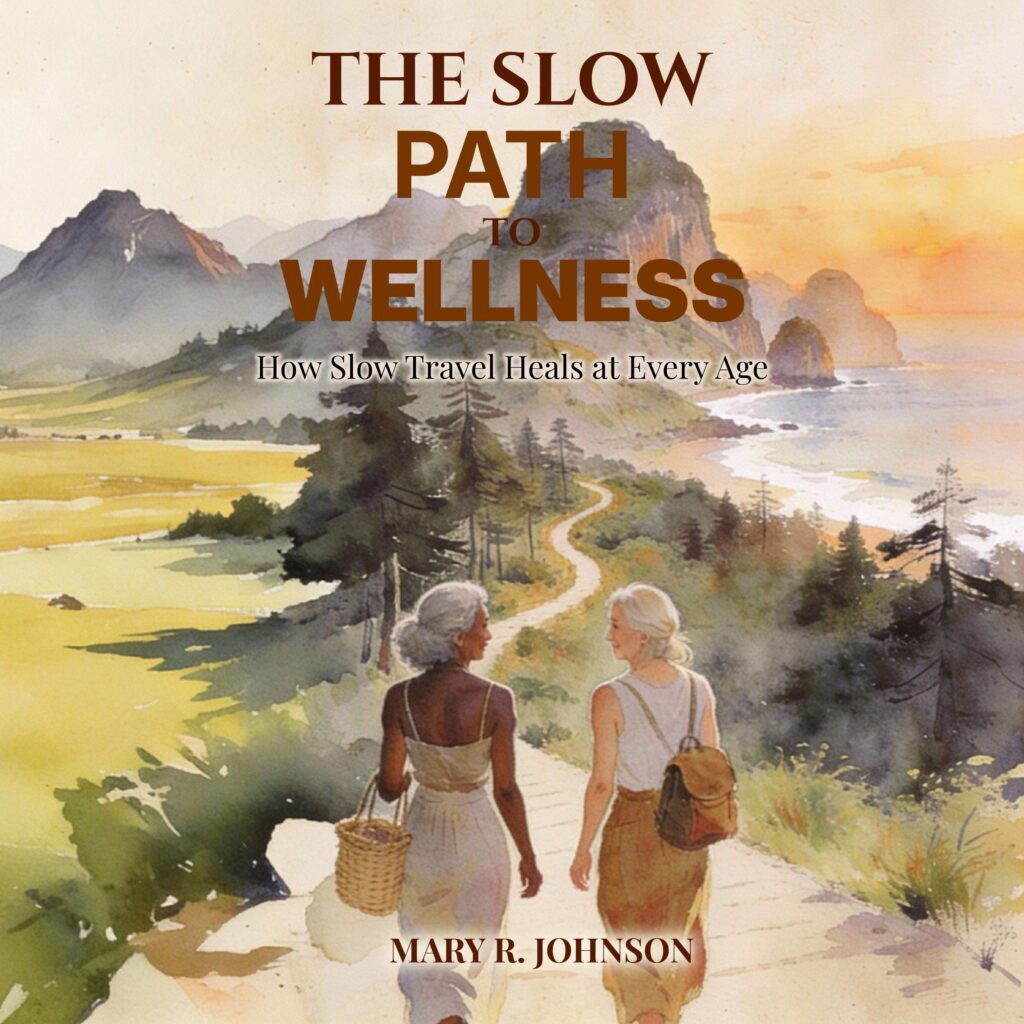
Not the only reason — slow travel had already gotten under my skin long before that. I’ve written about that journey in depth in my book, The Slow Path to Wellness: How Slow Travel Heals at Every Age, because the connection between leaving, slowing down, and actually feeling better is something I lived before I ever had the words for it. But when I looked honestly at where things were heading and what I wanted the next chapter of my life to feel like, staying didn’t win the argument.
What I found on the other side of that decision wasn’t perfect. Life abroad comes with its own challenges — logistics, language barriers, the occasional bout of loneliness that catches you off guard. I write about all of it, the good and the hard, because you deserve the real picture.
But here’s what I know for certain: I don’t regret it. Not even close.
So What Do You Do With That Thought?
If you’re in the early stages of this — just starting to let yourself take the idea seriously — here’s what I’d suggest.
Don’t talk yourself out of it before you’ve explored it. Too many people dismiss the idea as impossible before they’ve done a single hour of real research. The logistics are more manageable than you think. The resources exist. People figure it out every day.
Take staying connected, for example. That used to feel like a major obstacle — expensive roaming charges, unreliable SIM cards, the headache of switching carriers every time you crossed a border. Now I use Airalo, an eSIM app that lets me buy affordable local (or regional) data plans for virtually any country, right from my phone. It’s one of those things that makes the practicalities of living abroad feel far less daunting than they did even five years ago.
Start asking better questions. Not “can I afford to leave?” but “what would I need to know to make a real decision?” Not “is it safe?” but “which places would actually suit my health needs, my budget, my lifestyle?”
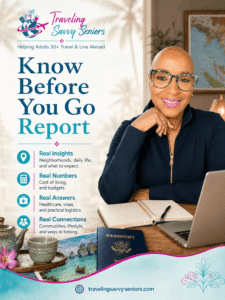
And if you want some help sorting through those questions, that’s exactly what I do. My Know Before You Go Report is designed for people right where you are — curious, maybe a little scared, not sure what’s realistic. It’s a senior-focused destination assessment built on lived experience, not a travel blog — delivered as a personalized PDF in 5–7 days.
Because this isn’t about running toward some postcard fantasy. It’s about finding a life that fits you — whatever that looks like.
You're Allowed to Want More From Life Abroad After 50
Here’s the thing I want to leave you with.
Wanting a different life doesn’t make you ungrateful. Feeling out of place in the country you grew up in doesn’t make you weak. And seriously considering moving abroad after 50 — or at any age — doesn’t make you reckless.
It makes you someone who hasn’t stopped asking what’s possible.
There are a lot of us out here. And we saved you a seat.
*Thinking about making a move but not sure where to start? My Know Before You Go Report is a senior-focused destination assessment built on lived experience — not a travel blog. For $197, you get a personalized PDF delivered in 5–7 days that gives you the real picture of what living in your target destination could look like for someone at your stage of life.

Want More of This? Come Join Us.
If this post resonated with you, there’s a whole community of savvy seniors asking the same questions — and finding some pretty wonderful answers.
Join my email list and get practical insights, honest stories from the road, and the kind of advice that actually helps you move from “what if” to “what’s next.” No fluff. No spam. Just real talk about living and traveling well after 50.
Mary is the founder of Traveling Savvy Seniors and the author of The Slow Path to Wellness: How Slow Travel Heals at Every Age — available on Amazon. She is currently based in Vung Tau, Vietnam.

Affiliate Disclaimer: This post may contain affiliate links, which means I may earn a small commission if you make a purchase — at no extra cost to you. I only recommend products and services I genuinely believe in and think you’ll love. Thank you for supporting Traveling Savvy Seniors!