My Vietnam Border Run Experience
A Vietnam border run may sound like a simple travel errand, but for travelers over 50, it can become a real test of patience, stamina, preparation, and trust in yourself.
Before planning any Vietnam border run, check the official Vietnam e-visa website for the latest rules, eligible border gates, and visa validity details. Vietnam’s e-visa can be valid for up to 90 days, with single or multiple entry options.
When you read about border runs online, they often sound simple.
Get picked up. Ride to the border. Exit the country. Enter the neighboring country. Wait for the new visa. Re-enter. Go home.
Technically, that is what happens.
But if you have ever dealt with immigration, long lines, early mornings, heat, paperwork, and uncertainty, you already know there is usually more to the story.
This week, I did my Vietnam border run from Vung Tau to Cambodia and back. It was same-day service, which meant I left before sunrise and returned later that day. The process worked, and I did receive my new 90-day Vietnam visa. But it was also long, hot, tiring, and a little eye-opening.
This is not official immigration advice. Rules, fees, and visa procedures can change. Every traveler’s situation may be different. But I want to share what the experience actually felt like, especially for travelers over 50 who may be considering slow travel, living abroad, or staying in Vietnam for the long term.
Because sometimes the official steps are only part of the story.
This Vietnam Border Run Started Before Sunrise
My pickup was at 4:45 a.m.
That should have been my first clue that this would not be a casual little day trip.
The driver picked us up early for the long ride from Vung Tau to the Cambodian border. Before the trip, my visa agent had already arranged the Cambodia visa after she was paid, so that part was handled before we arrived.
We reached the Vietnam side of the border around 8:45 a.m.
By then, we had already been on the road for about four hours. I was tired but relieved to finally arrive. I thought the hardest part might be over.
It was not.
The First Surprise: The Line-Cutting “Helpers”
Once we arrived, local men were walking around the lines looking for travelers willing to pay extra to move through the process faster.
They were not official immigration officers. They seemed more like border “helpers” or middlemen. If someone paid them, they would take that person’s passport to the window, ahead of everyone else, and try to get it stamped faster.
From what I was told, part of the money goes to the person helping, and part may go to the person at the window who allows the passport to be processed ahead of others.
That is not an official process.
When you are standing in a long immigration line, in the heat, surrounded by people who know the system better than you do, it can be tempting to pay just to make the problem go away. But travelers should understand that these side payments are not the same as official visa fees or government processing fees.
If there is no receipt, no official payment counter, and no clear explanation of what the money is for, be careful.
Getting My Vietnam Exit Stamp
I finally reached the passport window for my Vietnam exit stamp at around 10:35 a.m.
This was the part where I expected to simply have my passport stamped so I could officially exit Vietnam and proceed to the Cambodia side.
But when I reached the window, the officer unexpectedly charged me 100,000 VND.
That was not something I had been told to expect.
Several other travelers were also charged unexpected fees. I cannot speak to every person’s situation, and I do not know whether everyone had the same visa type, passport situation, or travel history. But from what I saw, I was not the only one surprised.
This is one reason I suggest bringing extra cash when running the border.
Not because every charge is official. Not because travelers should simply pay whatever they are asked. But when you are in the middle of an immigration process, far from home, with limited options, it is better to be prepared than stuck.
At the same time, it is important to distinguish between an official fee and an unofficial request. An official fee should usually come with a clear reason and a receipt. An unofficial payment may feel vague, rushed, inconsistent, or undocumented.
Sending My Exit Stamp to the Agent
As soon as I received my Vietnam exit stamp, I had to send a copy of it to my visa agent.
That step was important because the agent needed proof that I had exited Vietnam before she could finalize my new Vietnam visa for re-entry. The law requires that you can only apply to enter or re-enter Vietnam from outside of the country.
Once I sent the exit stamp, we continued to the Cambodia side of the border.
At this point, we were not finished. We had only completed the first major step.
Crossing Into Cambodia During the Border Run
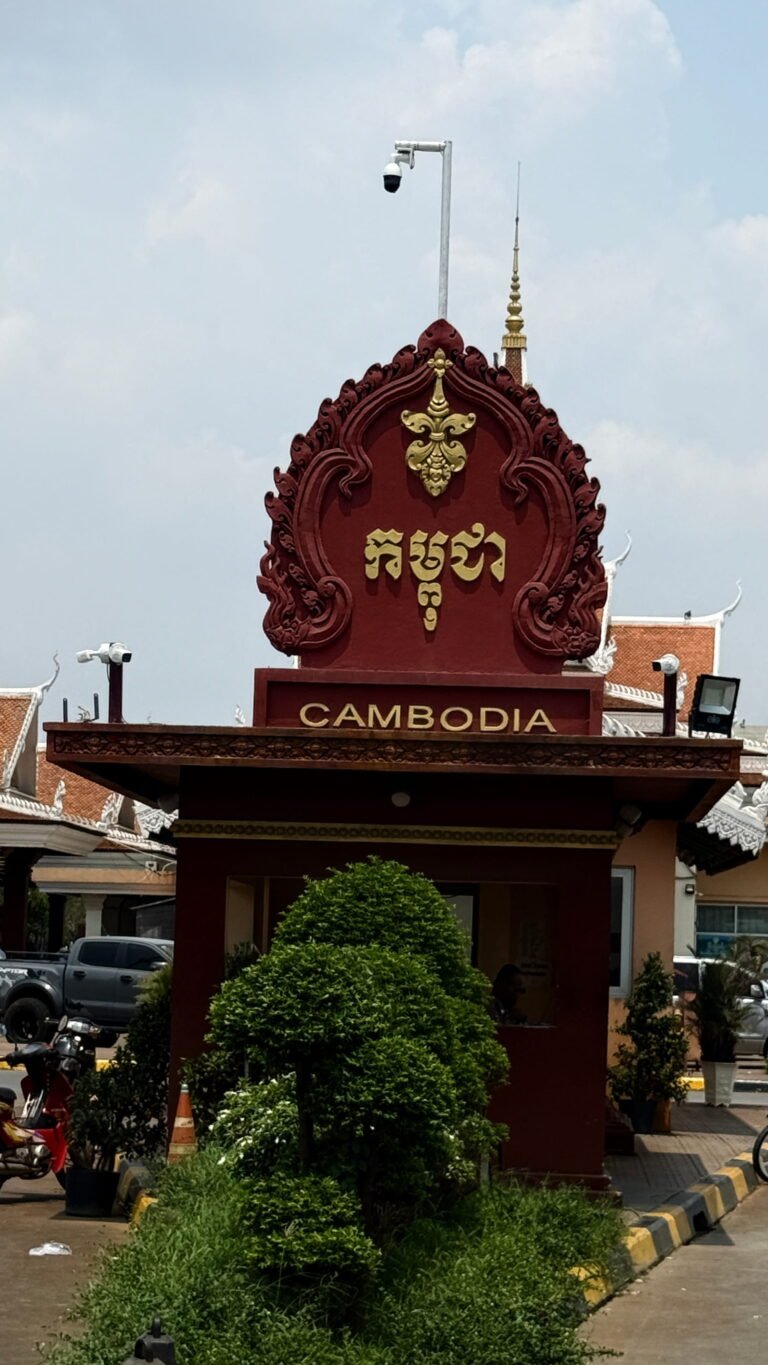
We crossed to the Cambodian border area around 11:00 a.m.
There, we filled out a short form. That part was much easier than the Vietnam exit side. The paperwork took about 15 to 20 minutes, and the process moved fairly quickly.
After that, we waited outside while my agent processed the new Vietnam visa.
The wait for the new visa was around 45 minutes.
Waiting outside may not sound like a big deal, but by this time we had already been up for hours, sat through a long drive, stood in lines, and dealt with border confusion. There was no comfortable air-conditioned waiting area for us. We had to manage the process as best we could.
For younger backpackers, this might feel like just another travel inconvenience. But, for travelers over 50, especially those with mobility concerns, heat sensitivity, back problems, knee pain, anxiety, or medical conditions, this is something to take seriously.
A same-day border run is doable.
But it is not effortless.
Printing the New Vietnam Visa
After the new 90-day Vietnam border was granted, we needed a printed copy before going back to the Vietnam side.
There was a copy center right outside the Cambodian immigration building, so we stopped there and printed the new visa. That cost 20k VDN (.76 USD).
That is another detail people may not think about in advance. Having the visa approval is one thing. Having the printed document ready for re-entry is another.
For this kind of trip, do not assume everything can be handled digitally. Bring printed copies when possible, and be prepared to print documents if needed.
I would suggest having copies of your passport page, current visa, new visa approval if available, agent contact information, and any documents connected to your stay.
When you are hot, tired, and standing near an immigration building, that is not the time you want to be searching through your phone for documents with a weak signal.
Returning to the Vietnam Side
Once we had the printed copy of the new visa, we returned to the Vietnam border for final processing so we could re-enter the country.
This was another long wait.
We stood in line for about 1 hour and 45 minutes.
By then, the day was really starting to wear on me. We had left Vung Tau before sunrise, driven for hours, waited in multiple lines, exited Vietnam, crossed into Cambodia, waited for the new visa, printed the document, and were now standing in another long line to re-enter Vietnam.
Again, there were local men scouting the lines, looking for people willing to pay them to move their passports forward.
The amounts I heard ranged from around 200,000 VND to 500,000 VND ($0.76 to $19.00 USD) per person (which, considering the wait time, is really not bad). Many people paid. From what I was told, the person helping may keep a smaller portion, while the rest goes toward getting the passport processed faster at the window.
Again, that is not an official government fee.
I understand why people paid. After standing in the heat for so long, I truly understand the temptation. When you are tired, hot, and ready to go home, the idea of paying extra to avoid another hour or two in line can feel very appealing.
Looking back, I understand why my tired brain went there. I just wanted the day to be over. But I also think travelers should be careful. There is a difference between paying for an official expedited service through a legitimate channel and paying someone unofficially to cut the line.
That distinction matters.
The Full Day: Five Hours at the Border, Eight Hours on the Road
We finally left the border around 2:00 p.m. to return to Vung Tau.
The border processing itself took about five hours total.
The drive there was around four hours, and the drive back was another four hours.
Altogether, this was roughly a 13-hour day, depending on pickup, traffic, stops, and drop-off.
And the hardest part was not only the length of the day.
It was the heat.
There was no air conditioning while standing in the immigration lines. That made everything feel more exhausting. When you are standing outside or in crowded, hot areas for hours, it takes a toll.
This is especially important for older travelers to understand. A border run may sound simple when someone explains it online, but physically, it can be draining.
What I Would Do Differently for My Next Vietnam Border Run
Next time I do a Vietnam border run, I would plan more carefully around comfort, timing, and support.
I would:
- still bring extra cash, but I would separate official-fee money from emergency money
- bring smaller bills, so I would not be stuck trying to make change in a stressful situation
- bring more water, snacks, a portable fan, and maybe even a cooling towel
- dress for heat, not style. Comfortable shoes are a must because you may stand much longer than expected.
- Make sure my phone is fully charged and bring a power bank. Your phone is essential for communicating with your agent, sending your exit stamp, receiving your new visa, and keeping copies of important documents.
- print whatever I could before leaving, even if I thought I might not need it
- mentally prepare for unexpected delays, confusing instructions, unofficial “helpers,” and extra stress
What I would not do is assume the process will be quick just because someone says it is “same-day service.”
Same-day does not mean easy.
Tips for Travelers Over 50 Planning a Vietnam Border Run
If you are over 50 and considering a Vietnam border run, do not go into it casually.
This is a long, physically demanding travel day unless you’re planning to stay overnight in the local area for convenience or comfort. You need stamina, patience, and a backup mindset. Even with an agent helping you, you still have to go through the actual border process yourself.
Be careful with unofficial payments. Some people may offer to help you move faster, but that does not mean it is official, legal, or risk-free. When in doubt, ask whether the fee is official, whether there is a receipt, and whether payment can be made through a formal counter.
At the same time, do not be naive. Border crossings can be messy. Bring extra cash, keep your documents organized, and expect some uncertainty.
If you have mobility issues, heat sensitivity, or anxiety around crowds and government processes, you may want to think carefully before doing this alone. Having a reliable agent or traveling with others can make a difference.
What This Experience Taught Me
This Vietnam border run reminded me that living abroad is not always beaches, cafés, low-cost living, and beautiful scenery.
Sometimes it’s:
- paperwork.
- a 4:45 a.m. pickup.
- it’s standing in the heat at a border, trying to figure out which fee is official and which one is not
- waiting for a message from your agent and hoping everything goes smoothly
But this is part of the real side of slow travel and living abroad.
It does not mean the lifestyle is not worth it. Vietnam still feels like a meaningful place for me. But experiences like this are exactly why I believe people over 50 need honest information before they make big travel or relocation decisions.
Not fear-based information.
Real information.
The kind that helps you prepare.
Because starting over after 50 does not mean everything will be easy. It means learning how to move through unfamiliar situations with patience, awareness, and self-trust.
And this week, standing in those long border lines, I had to use all three.

Practical Border Run Checklist
Before doing a Vietnam border run, I would suggest bringing:
- your passport
- printed copies of your current visa
- printed copies of your new visa or approval documents if available
- your agent’s contact information
- a fully charged phone
- a power bank
- extra cash in smaller bills
- water
- snacks
- a portable fan
- comfortable shoes
- medication if needed
- reading glasses if you use them
- and plenty of patience.
Patience may be the most important item on the list.
Final Thoughts
My Vietnam border run was successful, but it was not easy.
We left before sunrise, spent hours on the road, waited in long lines, dealt with unexpected charges, crossed into Cambodia, waited for the new visa, printed the paperwork, returned to Vietnam, stood in another long line, and finally headed back to Vung Tau around 2:00 p.m.
It was long, hot, and a learning experience.
And if you are planning to live abroad or slow travel long-term, these are the kinds of experiences you need to understand before you go.
Not to scare you.
To prepare you.
Because the more prepared you are, the less overwhelming these moments become.
And that is really what slow travel after 50 is about — not avoiding every hard thing, but learning how to move through the world with more awareness, flexibility, and confidence.
My Slow Start Session was created to help you think through the practical side of this lifestyle before making big decisions. It is not about rushing into a move. It is about understanding what daily life, travel logistics, visas, neighborhoods, comfort, safety, and emotional readiness can really look like.
Because starting over after 50 is possible.
But it helps to have honest guidance before you take the leap.
Subscribe for More
If you are thinking about slow travel, living abroad, or starting a softer life after 50, I’d love to have you join the Traveling Savvy Seniors community.
Subscribe to the site for honest stories, practical travel tips, relocation lessons, senior-friendly guidance, and real-life updates from the road — the kind of information that helps you prepare before you take the leap.
Because life after 50 does not have to get smaller.
It can become slower, wiser, freer, and more aligned with the life you actually want to live.
Subscribe today and start exploring what your next chapter could look like.