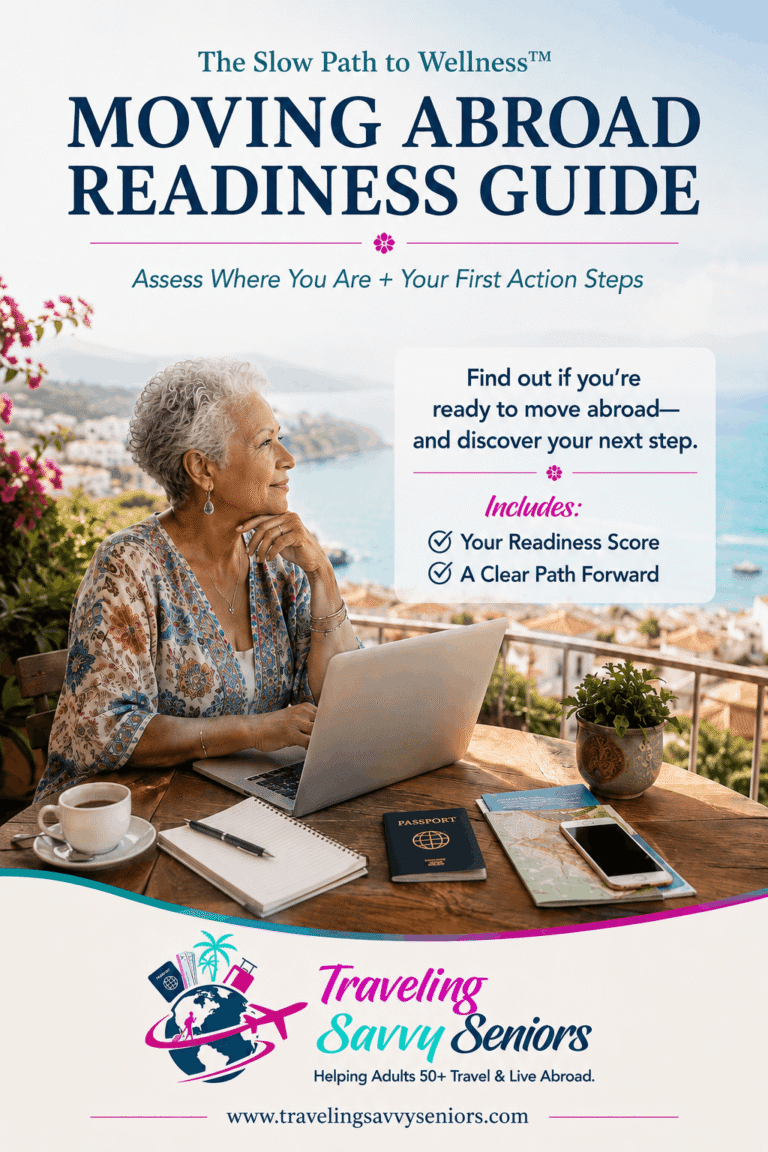
I remember the morning I stopped pretending. Real healing after 60 doesn’t announce itself — it arrives quietly, in the space between who you’ve been performing and who you actually are.
I wasn’t falling apart. There was no dramatic breakdown, no crisis that forced my hand. I was sitting at my kitchen table with a cup of coffee, looking out at a perfectly ordinary morning, and I realized — quietly, clearly — that I had been performing okayness for a very long time.
Not lying, exactly. Just managing. Keeping the surface smooth. Answering ‘I’m fine’ so many times that I’d almost started to believe it myself.
Healing after 60 doesn’t always look like what we expect. It rarely announces itself. But for me, it started with one decision — a one-way ticket — and a life 8,000 miles from everything I thought I needed to be okay.
“The woman who does not require validation from anyone is the most feared individual on the planet.”
— Mohadesa Najumi
What 'Fine' Actually Costs You — Healing After 60
There’s a particular cost to performing wellness you don’t actually feel. It’s not paid all at once — it comes out slowly, in the currency of energy, creativity, and genuine connection.
For many women over 50 and 60, the habit of being fine runs deep. We learned early that our emotional needs were secondary. That strength meant not burdening others. That if we just kept moving, kept managing, kept showing up — the feeling of something missing would eventually go away.
It doesn’t go away. It waits.
And somewhere in the waiting, it starts to show up in the body. In the fatigue that sleep doesn’t fix. In the low-grade anxiety that has no clear cause. In the growing sense that the life you’re living isn’t quite the one you were meant for.
Healing after 60 requires more than positive thinking or a new routine. Sometimes it requires a completely different environment — one that interrupts the patterns so thoroughly that something new finally has room to grow.
Why a Change of Place Can Change Everything
I want to be careful here, because what I’m describing isn’t escapism. Running away and moving toward something are very different acts. One is driven by fear; the other by clarity.
What I know from my own experience — and from the research on environmental psychology — is that a genuinely new setting interrupts old patterns in a way that very little else can. When your surroundings change completely, the automatic behaviors and emotional grooves that kept you stuck don’t have the same foothold. You have, in a very real sense, permission to be different.
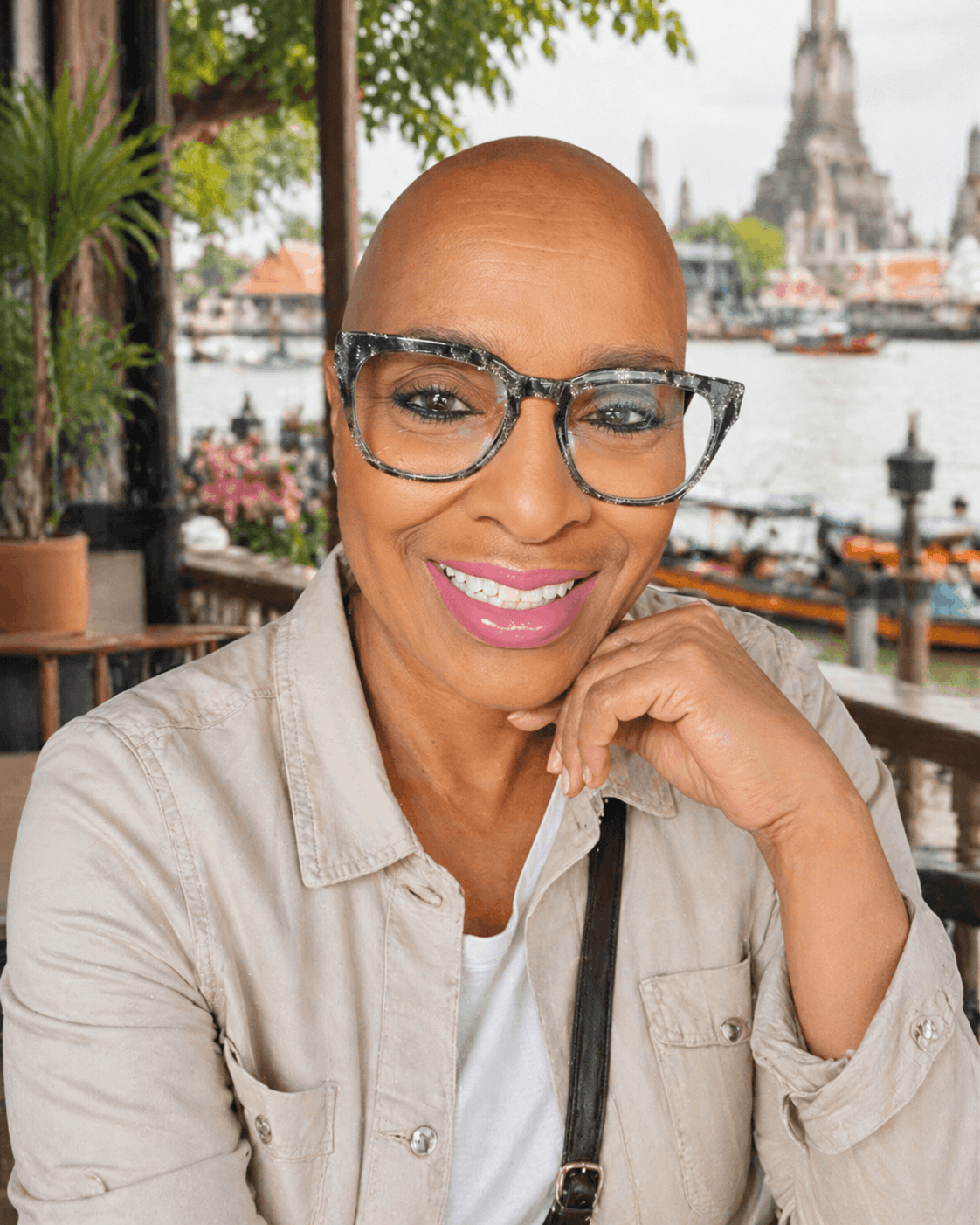
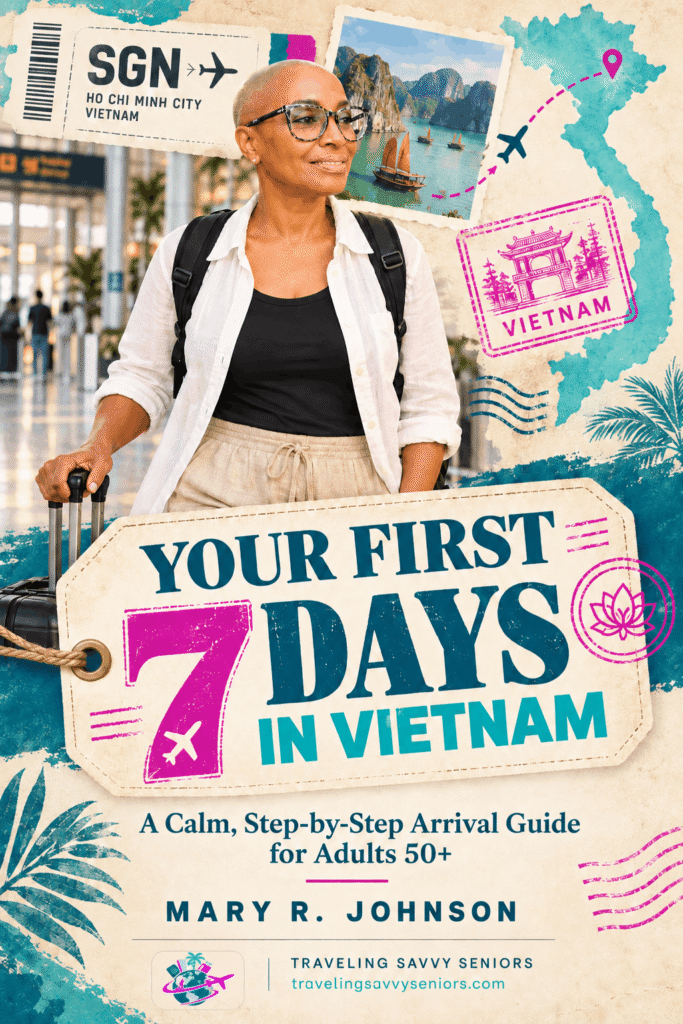
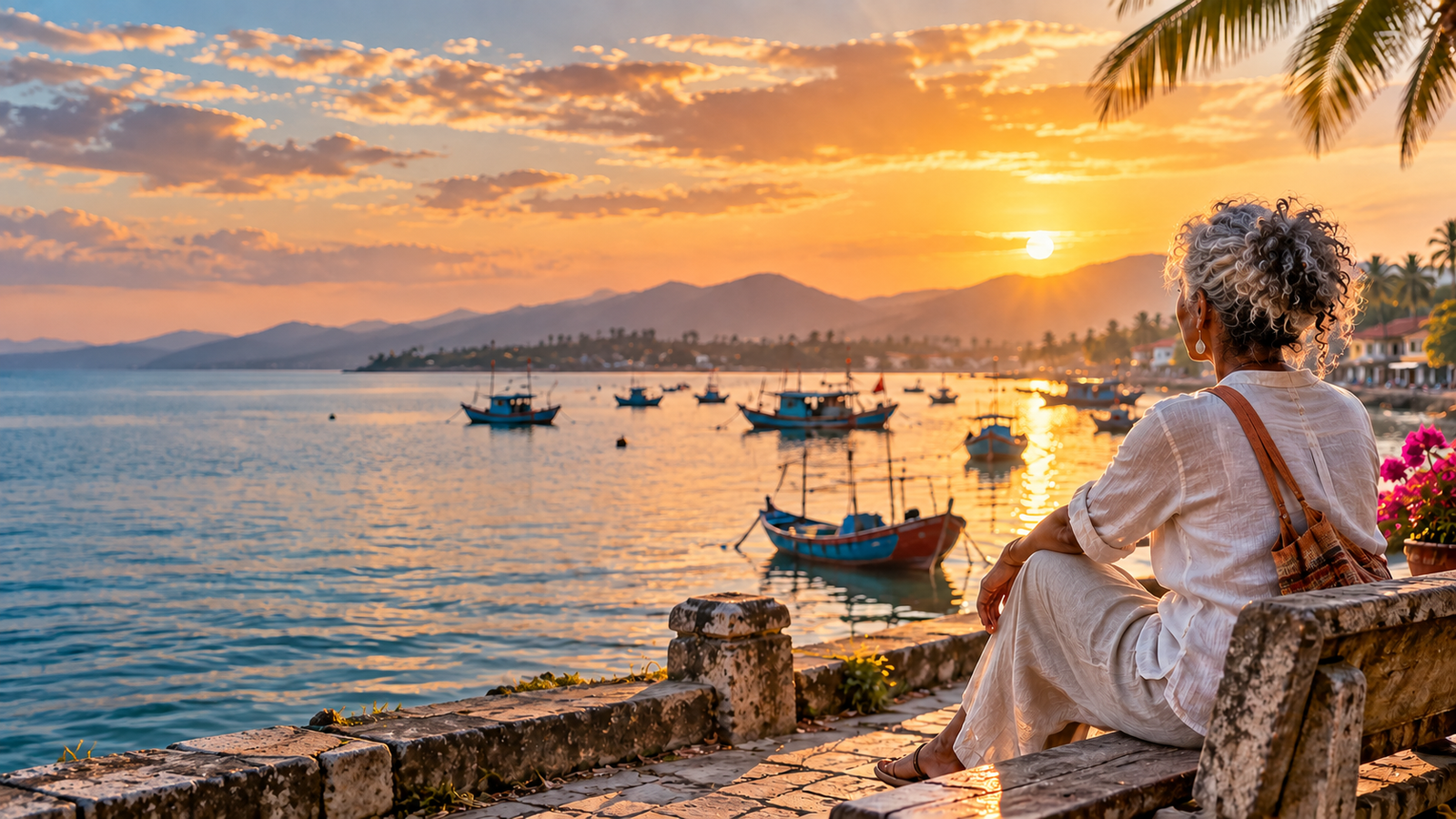
For me, that new setting was Vietnam. First Da Nang, then Hanoi, then Ho Chi Minh City, Cambodia, Chiang Mai, Thailand, Malaysia, Da Lat, and now Vung Tau — each place peeling back another layer of who I thought I had to be.
“You can’t go back and change the beginning, but you can start where you are and change the ending.”
— C.S. Lewis
The slower pace helped. The absence of certain social pressures helped. The daily reality of navigating something genuinely new — a language, a market, a neighborhood — kept my mind engaged in ways that crowded out the old rumination loops.
None of this was instant. But it was real. And it was cumulative.
What Healing After 60 Actually Looked Like — My Honest Story
What Changed
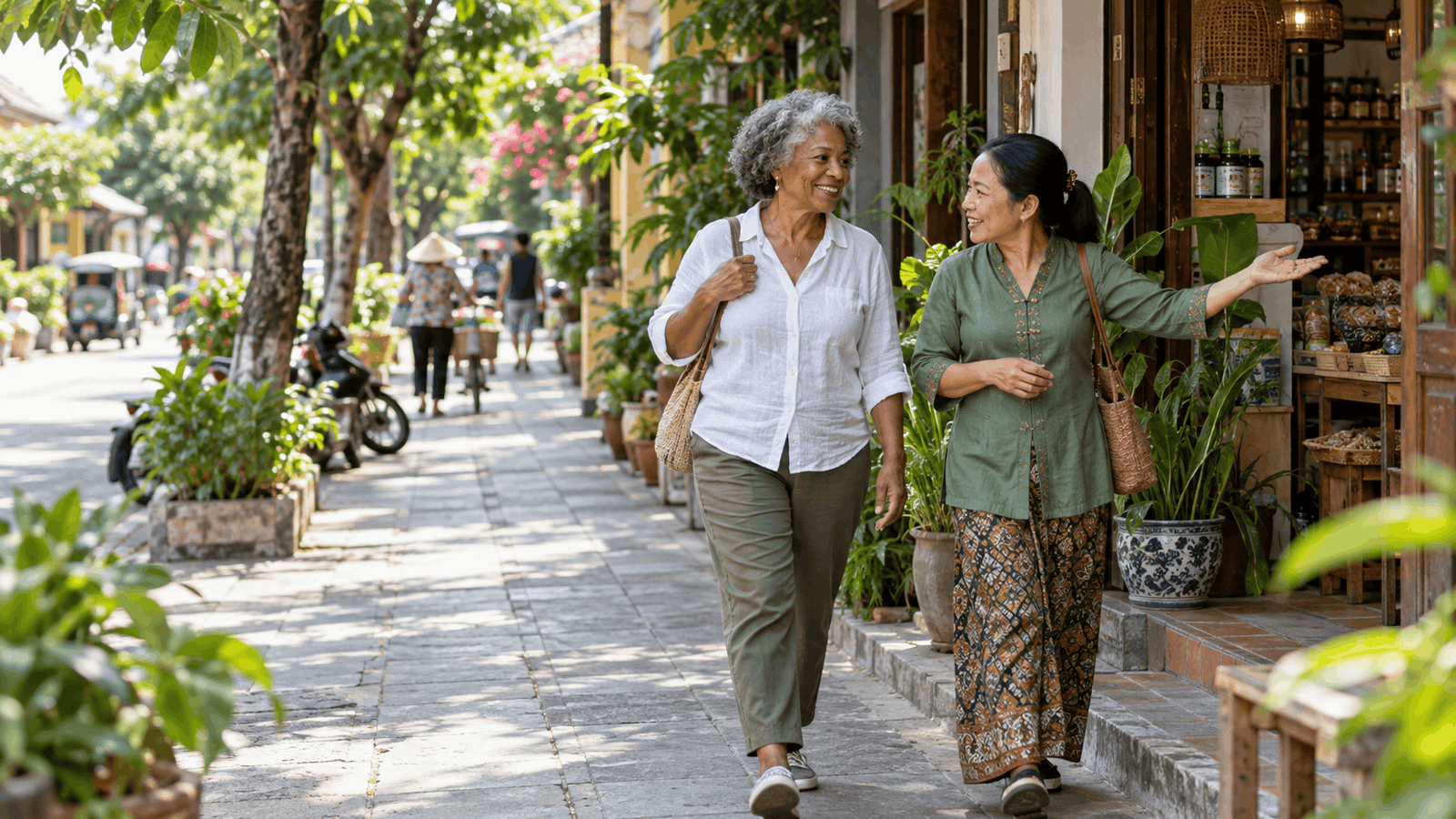
The first thing I noticed was my mornings. In my old life, I woke up already behind — already running a mental checklist, already bracing for the day. In Vietnam, I woke up curious. What would the market have today? What would I hear outside my window? What would I learn?
That shift — from bracing to curious — was not small. It changed the entire texture of my days.
The second thing was my body. Without fully realizing it, I had been carrying a level of physical tension that I’d normalized over decades. The slower pace, the warmer climate, the walking, the food — something in all of it began to release. I slept better than I had in years. The low-grade headaches I’d had so long I’d forgotten they were unusual — gone.
The third thing was my sense of self. Abroad, nobody knew my old story. Nobody had expectations of who I was supposed to be. I got to decide, slowly and deliberately, who I was becoming.
What Was Harder Than Expected
I won’t romanticize this. There were hard days — days when the loneliness was real, when the logistics were overwhelming, when I questioned everything.
The language barrier is real. The bureaucracy of visas and paperwork is real. The moments of genuine disorientation — cultural, emotional, logistical — are real.
What I’d tell my earlier self: the hard parts are finite. You learn the neighborhood. You find your rhythm. You build a life, piece by piece, that actually fits you. The hard parts of staying stuck, by contrast, don’t have an end date.
Staying connected to home helped more than I expected. I use Airalo eSIMs to keep data on my phone in every country without hunting for local SIM cards — a small thing that makes a meaningful difference when you need to reach someone.
Stay connected wherever you land: Get your eSIM through Airalo
I only recommend what I personally use
🌿 A Note for Accessible Travelers: Healing Abroad When Your Body Has Its Own Needs
If you’re managing a chronic condition, mobility consideration, or disability, the idea of going abroad to heal can feel out of reach — or even reckless. I want to speak to that directly.
Healing after 60 looks different when your body has its own demands. The good news is that slow travel, by design, is lower-impact than conventional travel. You’re not rushing between airports or managing packed itineraries. You settle in. You build routines. You create a life, not a highlight reel.
In my experience across Vietnam and Southeast Asia, healthcare is more accessible and affordable than most Americans expect. Quality hospitals and clinics are available in major cities. Medications that require expensive prescriptions at home are often available over the counter at a fraction of the cost.
International health coverage is non-negotiable — I use SafetyWing, which is designed for long-term travelers and expats and covers emergency medical care across most of the world. You can purchase it even after you’ve already left the US.
For more details on managing specific health conditions while living abroad, read my post: Managing Chronic Conditions While Traveling Abroad.
Slow living often improves chronic conditions rather than worsening them — less stress, fresher food, more movement, and better sleep are powerful medicine. If you have specific accessibility questions, that’s exactly what my Know Before You Go Report is designed to address.
International health coverage for expats and long-term travelers:
Learn more about SafetyWing Nomad Insurance
I only recommend what I personally use
How to Know If This Kind of Healing After 60 Is for You
This life isn’t for everyone, and I mean that genuinely — not as a disclaimer, but as useful information.
The women I’ve seen thrive in this kind of transition share a few qualities. They’re curious more than they’re impulsive. They’re willing to be uncomfortable in the short term for something better in the long term. They ask good questions rather than expecting easy answers. And they’re done waiting for someone to give them permission.
They’re not all extroverts. They’re not all wealthy. They’re not all in perfect health. But they share a willingness to take their own desire for a different life seriously.
If you’ve read this far, you might be one of them.
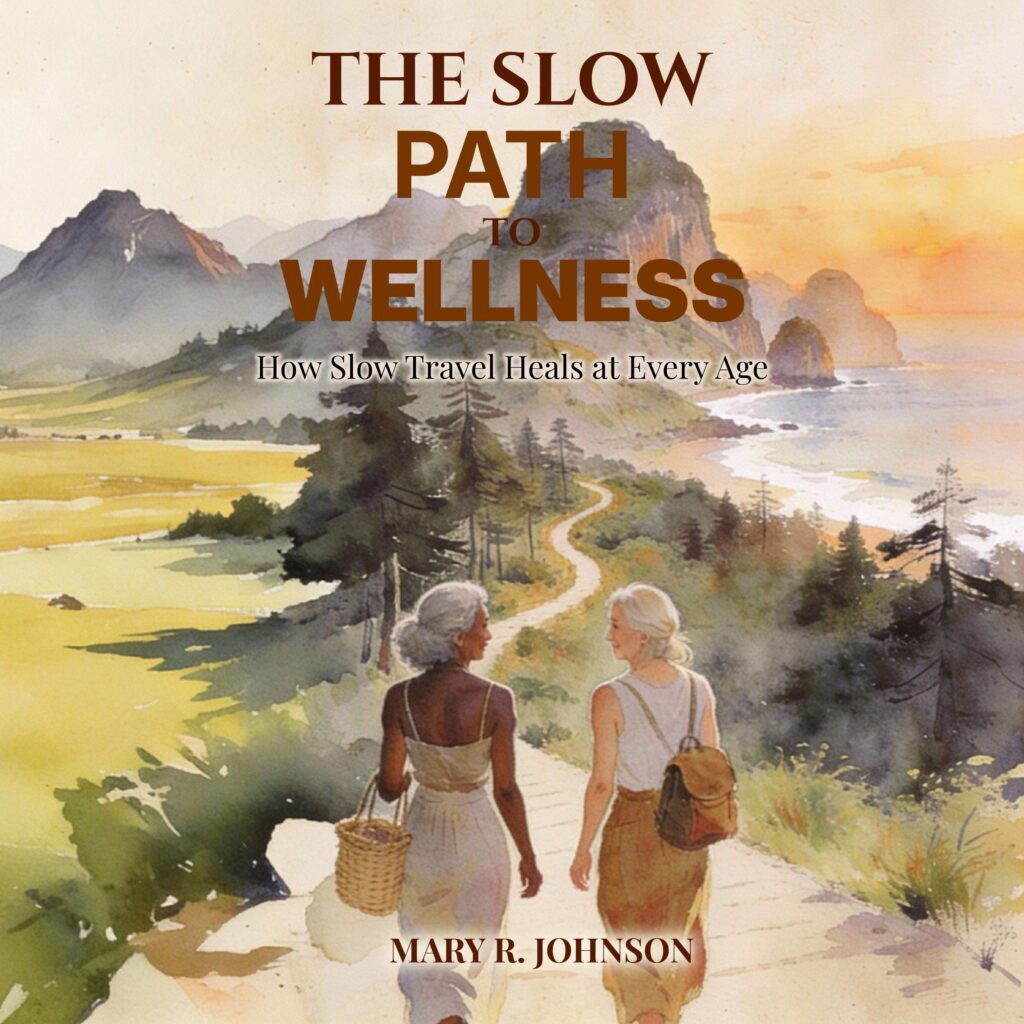
For a deeper understanding of how Slow Travel helps heal, check out my book,
The Slow Path to Wellness: How Slow Travel Heals at Every Age
Travel Journal: Get this quality travel journal to record your journey.
Your First Step Doesn't Have to Be a One-Way Ticket
Healing after 60 doesn’t require you to sell everything and leave next month. It starts with taking the question seriously — and getting real information instead of just imagining the worst.
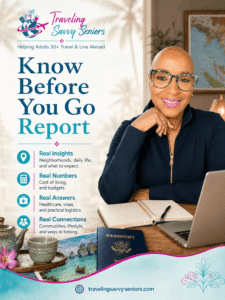
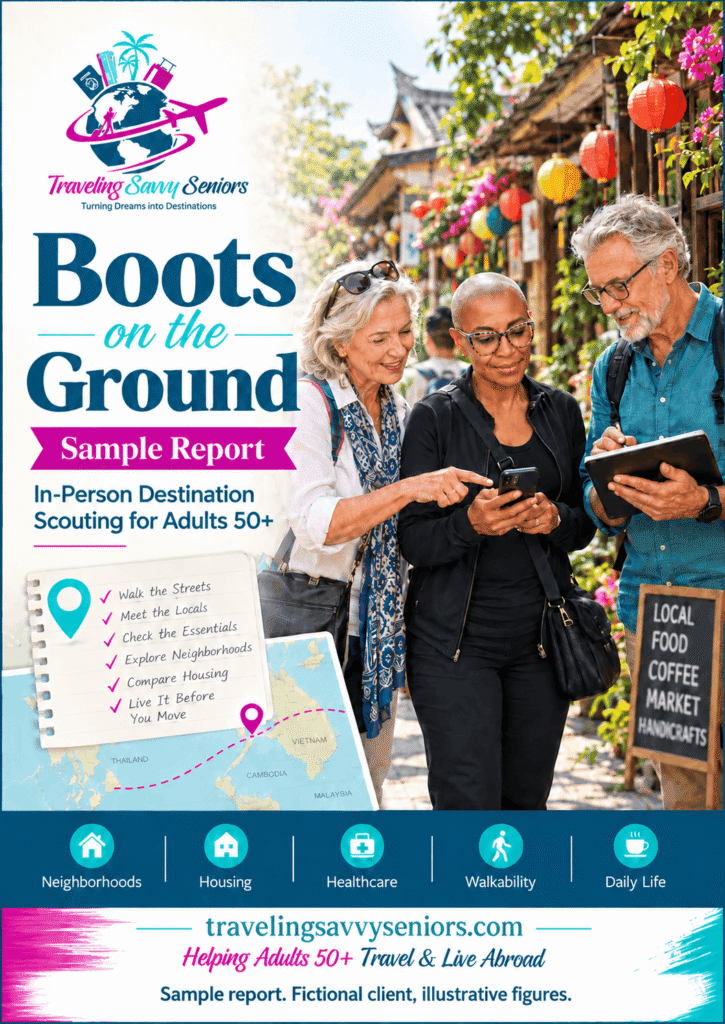
The Know Before You Go Report is where I’d suggest starting. It’s a detailed, personalized research document I create for the specific destination you’re considering — covering healthcare, cost of living, accessibility, housing, visas, and daily life realities. It’s research, not commitment. Information, not pressure.
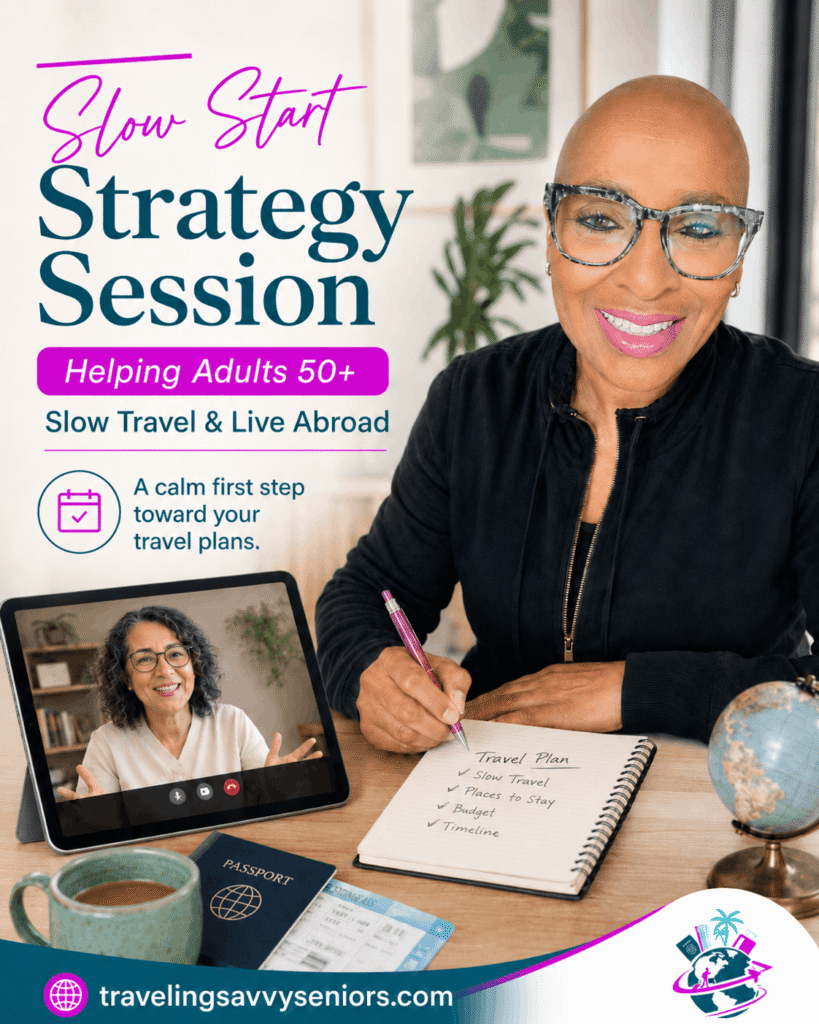
And if you want to talk it through with someone who has actually lived this — that’s what the Slow Start Strategy Session is for. One conversation. Real answers. No sales pitch.
Not ready for any of that yet? That’s okay too.
If you’re still in the “quietly wondering” stage, the best next step is simply staying connected. Join my list and I’ll send you honest, practical insights about slow travel, life abroad after 50, and what real healing can look like — no hype, no pressure, just one woman’s experience from the other side of the world.
Affiliate Disclaimer: This post may contain affiliate links, which means I may earn a small commission if you make a purchase — at no extra cost to you. I only recommend products and services I genuinely believe in and think you’ll love. Thank you for supporting Traveling Savvy Seniors!