There’s a particular kind of tired that doesn’t show up on a blood test. Not burnout in the dramatic sense — something quieter. It’s the feeling that the softer life after 50 you imagined somehow never arrived. And if you’re a woman over 50, there’s a good chance you’ve spent years being very good at pushing that feeling aside.
But lately, something is shifting. More and more women in their 50s, 60s, and beyond are naming what they actually want — and it isn’t more. It’s less noise. Less pressure. More mornings that feel like theirs. More time to breathe, to think, to simply be.
They’re craving peace. And a growing number of them are finding it abroad.
“There is more to life than increasing its speed.”
— Mahatma Gandhi
The Shift Nobody Talks About
At some point after 50, many women notice that the pace that once felt normal starts to feel like something they’re just surviving. The constant stimulation, the overloaded calendars, the low-grade hum of responsibility — it all starts to register differently.
This isn’t weakness. It’s biology.
Research on aging and the nervous system tells us that chronic overstimulation takes a measurable toll on the body over time — raising cortisol levels, disrupting sleep, increasing inflammation. And inflammation, as most of us now know, is at the root of nearly every age-related condition we’re trying to avoid.
Slower environments aren’t just emotionally appealing. They’re physiologically kinder. Less noise, more predictable rhythms, and fewer competing demands allow the nervous system to genuinely regulate — something that’s increasingly hard to do in the environments most of us have built our lives around.
This isn’t about giving up or opting out. It’s about finally listening to what your body has been quietly trying to tell you for years.
What a Softer Life After 50 Actually Looks Like
Let me be clear about what a softer life is not. It’s not retirement in the traditional sense. It’s not giving up ambition or contribution or meaning. It’s not lying on a beach doing nothing (though there’s nothing wrong with that, either).
A softer life is simply a life with less friction built into the daily experience of being alive.
Here’s what it looks like for me, on an ordinary Tuesday in Vung Tau, Vietnam:
I wake up without an alarm. I make coffee and take it to the balcony, where the air is already warm and the street below is just beginning to come alive. By 7am, the market vendors have set up — fresh vegetables, herbs I’m still learning the names of, fruit that costs almost nothing. I buy what looks good. I walk home.
Later, I write. I might walk along the waterfront. I’ll eat lunch at a small place around the corner where the woman who runs it knows my order. The afternoon is mine.
This is not a vacation. This is daily life — and it costs me less, in every sense, than the life I left behind.
That’s what a softer life looks like in practice: morning markets instead of morning commutes. Meals cooked from fresh ingredients instead of grabbed on the run. Afternoons with actual space in them. A pace that allows for rest, reflection, and genuine connection — not just busyness.
If you’re at the stage of dreaming and journaling your way toward this kind of life, a good travel journal is one of the simplest and most meaningful places to start — a place to capture what you’re leaving behind and what you’re moving toward.
Check out thisTravel Journal. Something to help document your adventures.
Why Abroad — The Cost of Living Difference
The obvious question is: why leave the US? Why not find a slower corner of the country and settle there?
It’s a fair question. And for some women, that’s exactly the right answer. But for many, there are a few things that only living abroad seems to provide.
The first is cost. In many parts of Southeast Asia — Vietnam, Thailand, Malaysia — a comfortable, fully-furnished apartment in a walkable neighborhood costs a fraction of what it would in the US. Fresh food is inexpensive. Healthcare is accessible and affordable. The financial reality of a softer life after 50 is significantly easier to achieve abroad
One thing I always make sure is in place before I settle anywhere new: international health coverage. I use SafetyWing Travel Insurance — it’s designed specifically for people living and traveling abroad long-term, and the cost is a fraction of US health insurance. You can even purchase it after you’ve already left home.
Get a quote and learn more: SafetyWing Nomad Insurance
(I only recommend what I personally use)
The second is the psychological reset that comes from a genuinely new environment. When you completely change your surroundings, you interrupt old patterns — including the ones that kept you exhausted and overscheduled. There’s something about being new somewhere that gives you permission to construct your life differently.
The third is community. Women over 50 have been choosing a softer life after 50 for exactly these reasons. There’s a particular warmth and openness among people who’ve made a similar choice. They’re not strangers for long.
One practical note: staying connected abroad is far easier than most people expect. I use Airalo for local data eSIMs in every country I visit — no hunting for SIM cards at the airport, no unlocking hassles. It takes about three minutes to set up before you board.
Stay connected from day one: Get your eSIM through Airalo
(I only recommend what I personally use)
And when you’re out exploring your new neighborhood daily, a good lightweight day bag makes all the difference — big enough for the market, small enough not to weigh you down.
Consider this Lightweight Anti-Theft Day Bag
🌿 A Note for Accessible Travelers
If you’re navigating a mobility consideration, chronic condition, or disability, the idea of moving abroad might feel like it’s not written for you. I want to gently push back on that.
Many of the things that make a softer life abroad appealing — walkable neighborhoods, affordable daily help, an unhurried pace — also make it more accessible than conventional travel. In Vung Tau, much of the seafront promenade is flat and easily navigable. Grab and other ride apps make getting around simple without needing to drive. The cost of in-home support — whether a housekeeper, personal assistant, or help with daily tasks — is genuinely affordable in ways that aren’t realistic in the US.
SafetyWing’s Nomad Insurance also covers emergency medical care across most of the world, including Southeast Asia — an important layer of protection for women managing ongoing health needs.
Slow travel, by its very nature, is lower-impact than traditional travel. You settle in, learn the neighborhood, build routines. For women with health considerations, that slower rhythm can make the difference between a life that’s sustainable and one that isn’t.
If you have specific questions about accessibility in Vietnam or Southeast Asia, that’s exactly what my Slow Start Strategy Session is designed for. And if managing a chronic condition abroad is your biggest concern, I’ve written a dedicated post on that too called “Managing Chronic Conditions While Traveling Abroad.”
— link
How Women Are Making the Leap – What the First Step Usually Looks Like
The women I know who have chosen this life don’t fit a single profile. They’re retired teachers and former executives. Divorced women starting over. Empty nesters who looked around at the house that was supposed to feel like freedom and felt something closer to emptiness instead. Women managing health conditions who needed a life that cost them less energy, not more.
What they share isn’t a particular background or income level. It’s a willingness to take the question seriously: what if a different kind of life were actually possible?
Most didn’t dive in all at once. They started with a slow travel trip — a month in one place, then another. They tested the reality against the idea. They asked hard questions about healthcare, finances, logistics, and loneliness. And they discovered that most of their fears were smaller than they’d imagined, and most of the rewards were larger.
That’s not to say it’s simple, or that it’s for everyone. But it’s far more within reach than most women over 50 have been led to believe.
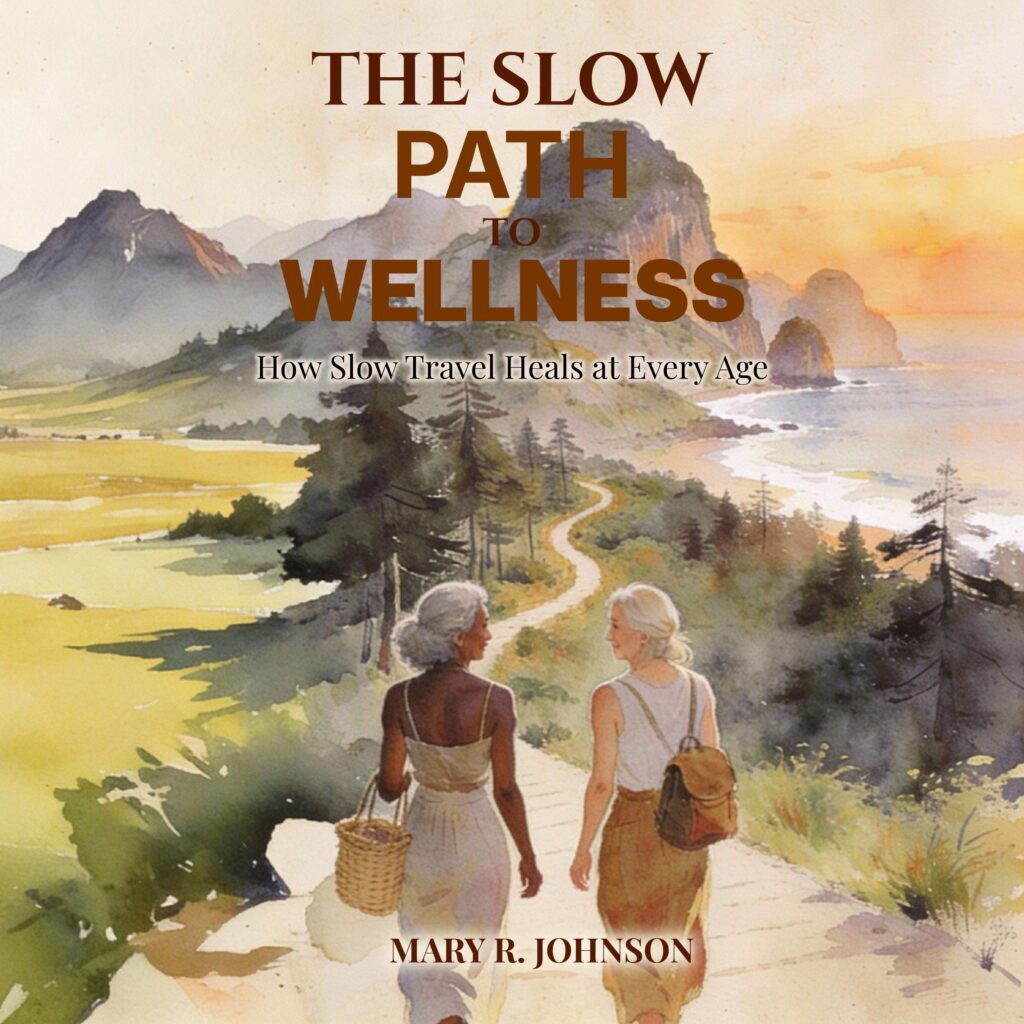
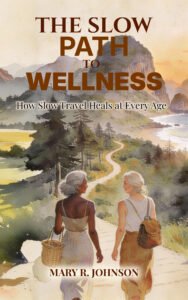
If you want to go deeper on the emotional and physical dimensions of this kind of life, my book walks through the whole slow path — including the parts nobody warns you about.
If a softer life after 50 is what you’re craving— if you’ve been quietly carrying the thought “what if there’s a different way to do this?” — you’re not alone, and you don’t have to figure it out by yourself.
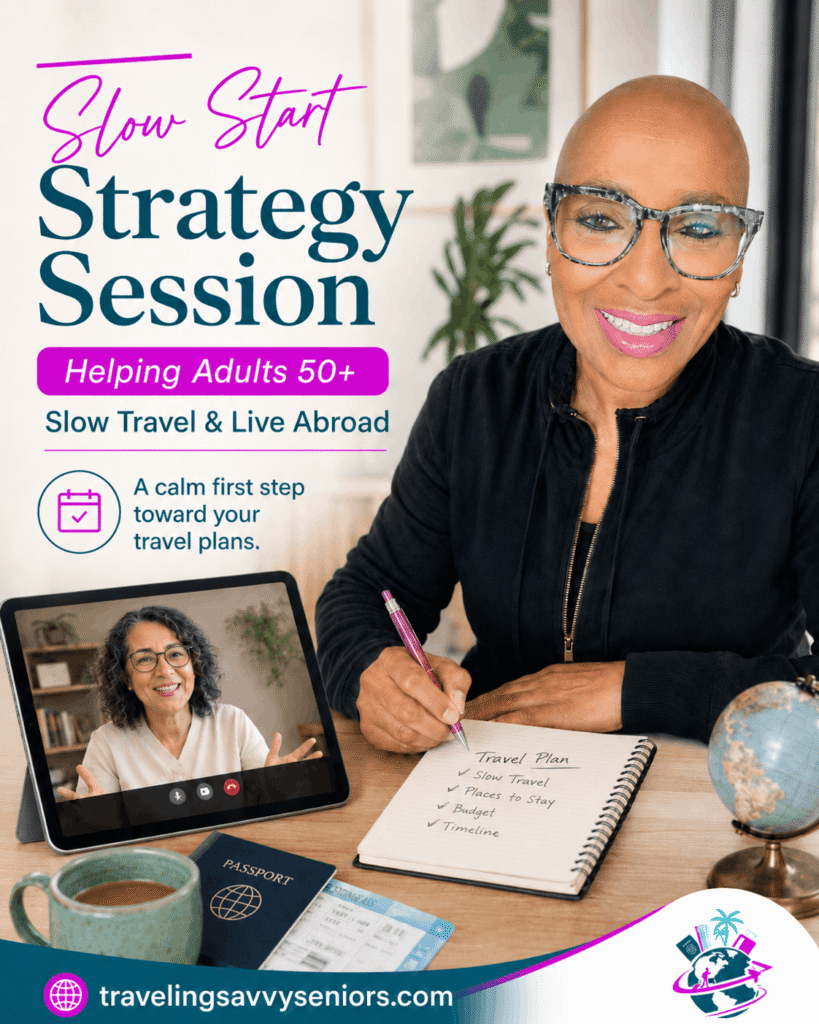
My Slow Start Strategy Session is a one-on-one conversation designed for exactly this stage: when you’re curious but not sure where to begin. We’ll talk about what you’re craving, what’s holding you back, and what a realistic first step might look like for you — whether that’s a one-month slow travel experiment or a longer-term relocation.
You’ve spent many years doing what was expected. This is the part where you get to ask what you actually want. If a softer life after 50 is what you’re craving, you don’t have to figure it out alone.
→ Book your Slow Start Strategy Session @ travelingsavvyseniors.com
Affiliate Disclaimer: This post may contain affiliate links, which means I may earn a small commission if you make a purchase — at no extra cost to you. I only recommend products and services I genuinely believe in and think you’ll love. Thank you for supporting Traveling Savvy Seniors!