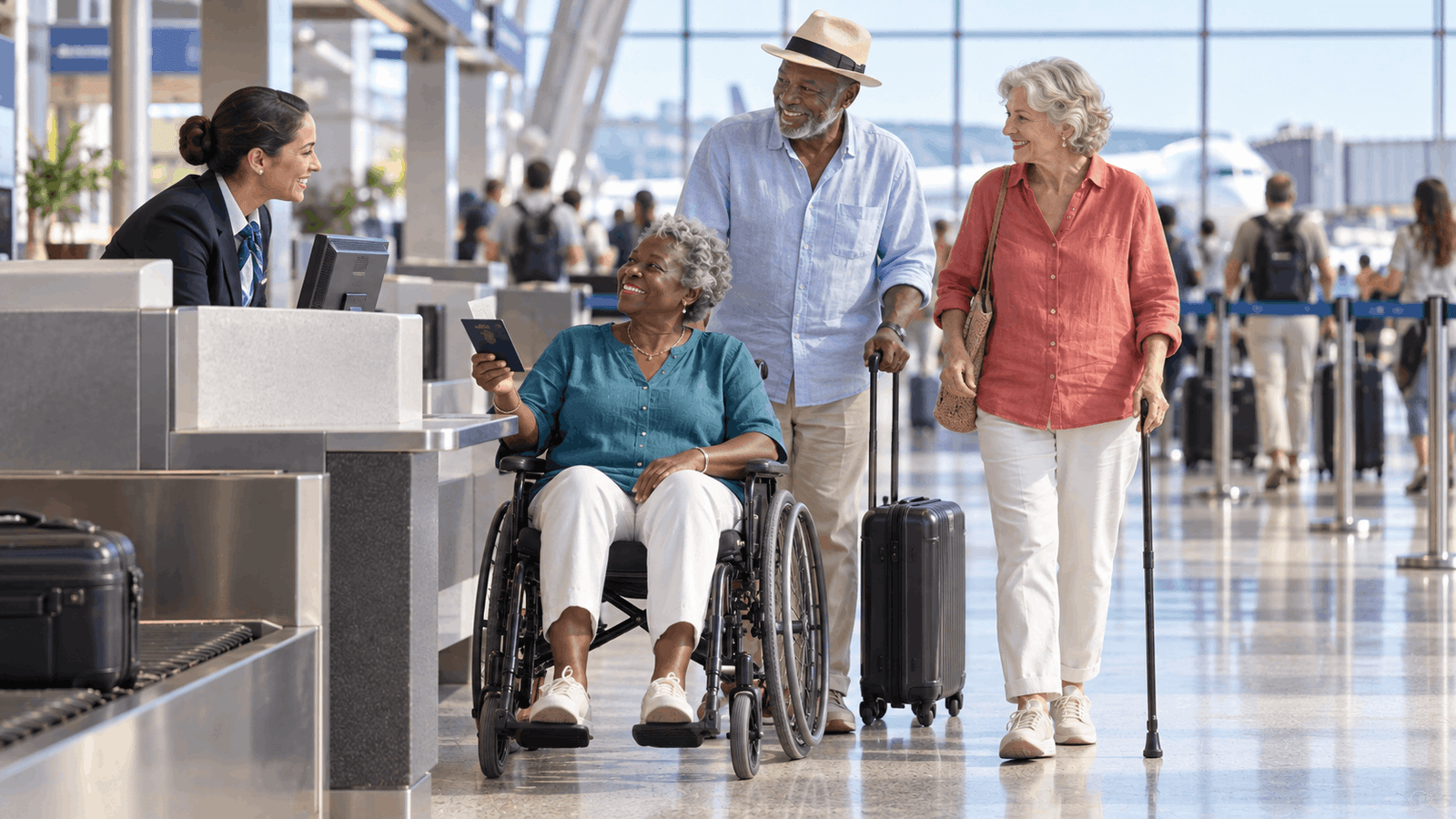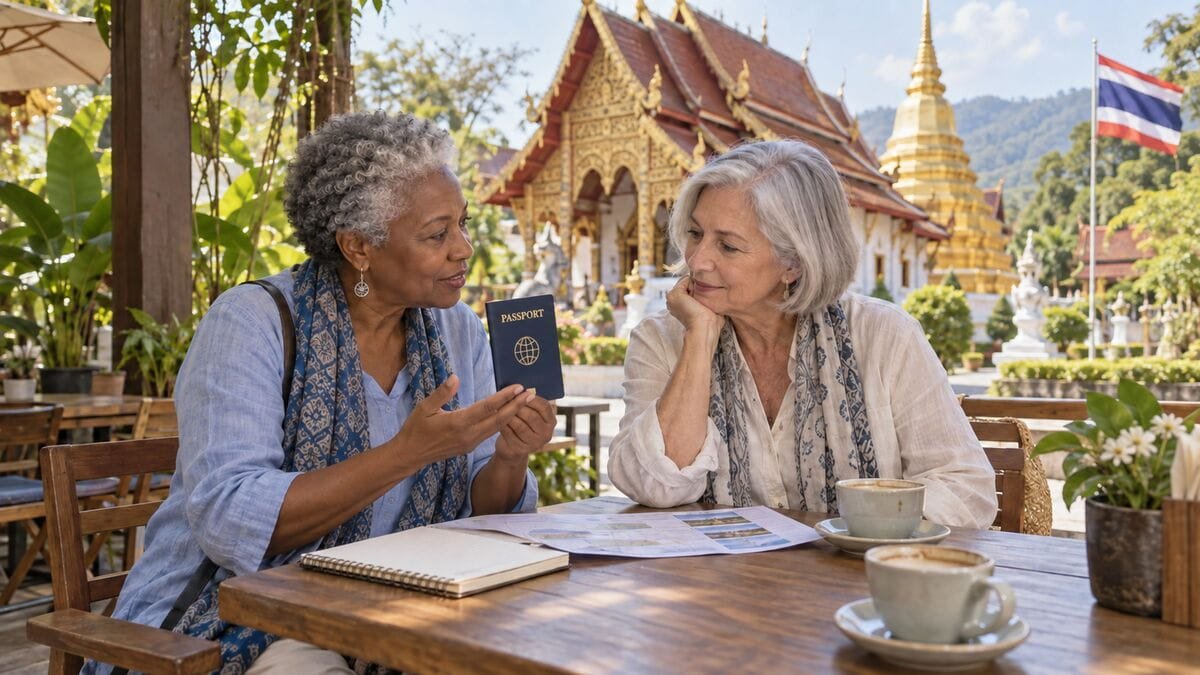
This is the honest guide to Ho Chi Minh City for seniors — and it starts with what nobody puts in the travel brochure.
You land at Tan Son Nhat Airport, step outside, and the heat hits you like opening an oven door. Then comes the noise — horns, engines, the constant whir of millions of motorbikes moving in every direction at once. You look at the street and wonder how anyone crosses it alive. You wonder, not for the first time, whether this city is really for you.
I understand that feeling. I’ve had it myself.
And yet, of all the Vietnamese cities I’ve spent time in — Da Lat, Da Nang, Hanoi, Vung Tau — Ho Chi Minh City surprised me most. Because once you understand how to move through it, it’s actually the most senior-friendly city in the country. The chaos is real, but it’s surface-level. Underneath it, you’ll find world-class hospitals, reliable app-based transport, coffee shops on every corner, and an international infrastructure that no other Vietnamese city can match.
The trick is knowing what you’re walking into — and how to walk into it on your own terms.
One quick note on the name: officially, it’s Ho Chi Minh City. But walk down any street and ask a local — they’ll call it Saigon. Throughout this post, I’ll use both interchangeably, just as the city itself does.
What Ho Chi Minh City for Seniors Is Really Like: Heat and Traffic
Let’s get the two big ones out of the way.
The heat is real, and it doesn’t let up.
Ho Chi Minh City sits close to the equator and has a tropical climate year-round. The best time to visit as a senior is November through March — the dry season, when temperatures range from around 70°F to 93°F and humidity is at its lowest. Avoid June through August if you can: it’s hot, humid, and rainy, and the combination makes outdoor activity genuinely uncomfortable.
If you’re visiting outside of that window, prepare accordingly. Wear light, breathable clothing. Comfortable walking shoes are non-negotiable. A wide-brimmed hat for sun protection isn’t optional — it’s essential. And here’s something I learned from experience that you won’t read in most travel guides: pack a small hand towel or washcloth.
I’m serious about this one.
In Da Lat, where the mountain air keeps things cool and pleasant, I rarely broke a sweat. In HCMC, there is simply no way around perspiring. I carried a small washcloth with me every time I went out, just to keep the sweat off my face and neck. It’s a small thing, but it made a significant difference in how comfortable I felt. I’d also recommend picking up a small portable handheld fan — you’ll see locals carrying them everywhere, and for good reason. Inexpensive, lightweight, and genuinely useful while you’re walking.
The heat management strategy that actually works:
Plan your day in two parts. Get out early — before 9am — when the temperature is still manageable and the city feels almost peaceful by comparison. By midday, retreat to air-conditioned spaces: a restaurant for lunch, a museum, a mall, your accommodation. Then head back out in the late afternoon when things cool slightly and the city comes alive again.
One of the things I genuinely appreciated about HCMC is how easy it is to rest when you need to. Coffee shops are everywhere — and I mean everywhere. Ducking into one for an iced drink and 15 minutes of air-conditioned recovery is completely normal and never feels awkward. I also found it easy to find somewhere to simply sit for a few minutes along the way — a bench, a shaded step in front of a building, a low wall. You don’t need to plan rest stops in advance. The city accommodates them naturally.
Now, the traffic
If the heat is something you manage, the traffic is something you accept. Ho Chi Minh City is home to millions of motorbikes, and they move in a way that looks lawless from a distance but operates on its own logic up close. Crossing a street means stepping out slowly and confidently — the motorbikes flow around you. It feels terrifying the first time. It becomes manageable after that.
But here’s what most travel guides don’t tell you: it’s not just about crossing streets. The traffic affects everything. The closer you get to the city center, the slower everything moves — and I mean genuinely slow. I experienced this firsthand returning from a border run. My Airbnb was on the outskirts of the city, away from the densest traffic. And yet, even from there, it took 20 to 30 minutes to travel a single mile down the road — let alone the additional time to reach my destination. One mile. Twenty minutes.
The traffic builds from early morning and doesn’t ease significantly until after 8pm. When I needed to make an early departure for my border run, we left at 4:45am specifically to get through the city before things got heavy. Even then, we were pushing it.
What this means practically for seniors:
First: use Grab for all your transportation. Grab is Vietnam’s equivalent of Uber — you book through the app, you get a clean car with an English-language interface, and crucially, you agree on a flat fare upfront. This last point matters more in HCMC than anywhere else in Vietnam. Because when you’re sitting in slow-moving traffic watching the minutes tick by, the last thing you want is a meter running. A flat fee agreed before you start means no surprises at the end of a long, hot ride.
Second: don’t underestimate travel time. What looks like a short distance on the map is rarely a short journey on the ground. Build generous buffers into every plan — for appointments, tours, airport transfers, everything. If you’re visiting a hospital or catching a flight, leave far earlier than you think you need to.
Third: if possible, choose accommodation on the outskirts of the city rather than the center. You’ll still face traffic, but less of it, and the area will generally be quieter and more manageable. If your accommodations are in or near the city center, factor the travel time reality into every day’s planning.
Why HCMC Is Actually the Most Senior-Friendly City in Vietnam
Here’s the case I’d make to any senior who’s written Saigon off as too chaotic:
The healthcare infrastructure is unmatched. HCMC has the best international hospitals in Vietnam — and it’s not particularly close. FV Hospital is French-managed and internationally accredited, with English-speaking staff and standards that compare favorably with those of Western facilities. Vinmec International Hospital and Hoan My are also excellent options. If you have a health concern while traveling, HCMC is the city you want to be in.
The international infrastructure is the best in the country. More international flights, more international restaurants, more English-speaking service, more familiar brands, and pharmacies. For seniors who are newer to Southeast Asia, that familiarity can be genuinely reassuring.
Tan Son Nhat Airport is Vietnam’s most connected international hub — the easiest city in the country to fly into and out of. If you’re doing a multi-city trip through Vietnam, HCMC as your entry or exit point gives you the most options.
A strong expat community means you’re not navigating this alone. There are established networks of long-term foreign residents who’ve figured out exactly how seniors in Ho Chi Minh City can live comfortably — and they’re generally happy to share what they know.
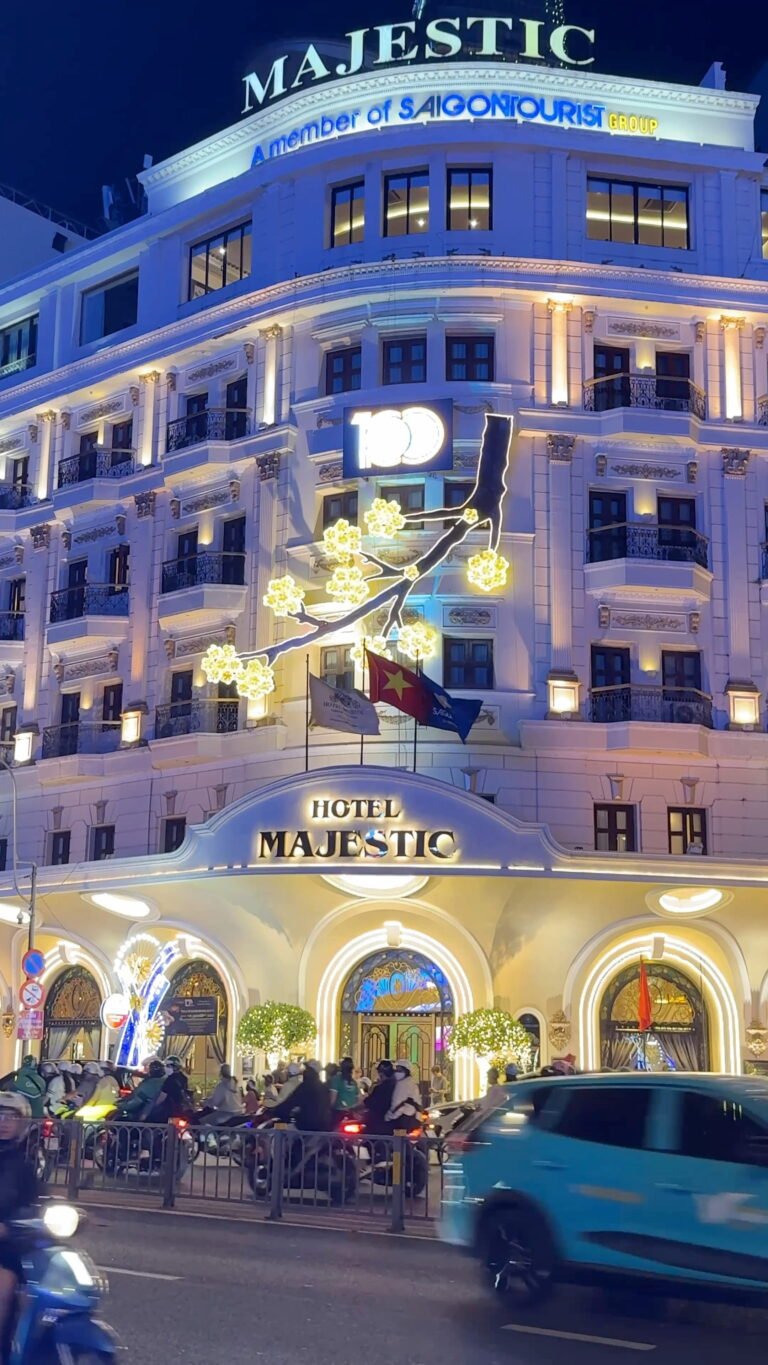
Things to Do: What Seniors Actually Enjoy in HCMC
Start here:
Reunification Palace is one of the most genuinely moving experiences in the city — a walk through modern Vietnamese history at a comfortable, air-conditioned pace. The grounds are beautiful and the building itself is fascinating.
The Opera House is a stunning example of French colonial architecture and hosts a rotating program of performances including ballet, Vietnamese traditional dance, and a remarkable bamboo circus show. A perfect evening option that requires no walking once you’re inside.
Saigon River cruise lets you take in the scale and energy of the city from the water — without dealing with street-level traffic or heat. A peaceful way to understand the geography of the place.
Rooftop cafés — Chill Skybar and Social Club are two of the most popular — offer extraordinary views with a drink in hand. The combination of elevation, breeze, and panorama makes for one of the most pleasurable hours you’ll spend in the city.
Chinatown (Cholon) is a neighborhood worth exploring — a maze of temples, markets, and medicine shops, home to the largest Chinese community in Vietnam. Best reached by Grab rather than on foot.
Day trips worth taking:
The Mekong Delta is ideal for seniors — you spend most of your time on a leisurely river cruise, stopping at local markets, watching traditional crafts, and sitting down to a homemade Vietnamese lunch. Very little walking, a great deal of beauty.
The Cu Chi Tunnels, used by the Viet Cong during the Vietnam War, are historically fascinating. The tunnels themselves are low and tight — but seniors can skip the crawling entirely and still get the full experience from the surface tour. Don’t let that detail stop you from going.
A note on the War Remnants Museum:
Go — but know what you’re walking into. This is a powerful, important museum, and it will affect you. The photographs are graphic and the subject matter is heavy. Give yourself time, go early when it’s less crowded, and don’t rush through it. Many visitors find it one of the most significant experiences of their Vietnam trip. Just prepare yourself emotionally before you walk in.
How HCMC Compares to Vietnam's Other Cities
If you’ve been following along on this blog, you already have a sense of Vietnam’s variety. Here’s where HCMC sits in that picture:
vs. Vung Tau: These two cities are two hours apart by road or ferry, and they couldn’t feel more different. Vung Tau is quiet, coastal, and residential — a city at its own pace. HCMC is the metropolis that Vung Tau residents escape on weekends. Many expats live in HCMC and visit Vung Tau to decompress.
vs. Da Lat: The most striking contrast of any two Vietnamese cities I’ve spent time in. Da Lat is cool mountain air, flower markets, and French colonial quiet. HCMC is heat, noise, and relentless energy. If Da Lat felt like exactly your pace, prepare for an adjustment in Saigon — and vice versa. They appeal to genuinely different temperaments.
vs. Da Nang: Da Nang is modern, mid-sized, and beach-focused. HCMC is larger, more international, more complex — and has no beach. Da Nang feels manageable in a way that HCMC doesn’t, at least at first. But HCMC offers things Da Nang simply can’t match in terms of healthcare, culture, and international access.
vs. Hanoi: This is the comparison most people are curious about, and the honest answer is that they’re two different Vietnams. Hanoi is the northern traditional, cooler in climate and temperament, with a stronger sense of old Vietnamese culture. HCMC is the south — modern, faster, more cosmopolitan, with a history shaped by French colonialism and the American war in ways that feel different from the north. Neither is better. They’re different countries within the same country.
Getting to HCMC: The Sleeper Bus Option
Most seniors fly into Tan Son Nhat Airport, and for good reason — it’s fast, convenient, and Vietnam’s most connected hub. But there’s another option worth knowing about, especially if you want to see more of the country along the way.
I arrived in Ho Chi Minh City from Hanoi by sleeper bus — a day-and-a-half journey that took me through the length of Vietnam. I wanted to see the country, not just hop between airports, and the sleeper bus made that possible in a way that was far more comfortable than I expected. Vietnam’s long-distance sleeper buses are a legitimate mode of transport — reasonably comfortable, equipped with reclining sleeper berths, and a practical way to connect the major cities without flying.
The cost difference is worth noting, too. At the time of writing, a flight from Hanoi to HCMC runs roughly $100 USD, while the sleeper bus costs around $50, half the price for a journey that also doubles as a window into the Vietnamese countryside.
Is it for every senior? No. A day and a half on a bus is a commitment, and it requires some flexibility with comfort and schedule. But if you’re the kind of traveler who values the journey as much as the destination, it’s worth considering. One practical tip: when booking, request a bottom berth. It’s easier to get in and out of, and simply more comfortable for anyone who doesn’t want to be climbing up to an upper bunk. It’s a road trip, just in a different country.
Practical Tips for Seniors in HCMC
- Download Grab before you land. Use it for everything — airport transfers, day trips, getting to appointments. The flat fare is your best friend in a city where traffic adds unpredictable time to every journey.
- Build travel time into everything. What looks close on a map may be 30–45 minutes in reality. Plan accordingly.
- Stay on the outskirts if possible. You’ll face less congestion and a quieter environment without sacrificing access to the city.
- Book accommodation with elevators confirmed — don’t assume, ask specifically.
- Carry small bills in Vietnamese Dong. Street vendors and coffee shops often can’t make change for large bills.
- Tap water is not safe to drink. Bottled water is cheap and available everywhere.
- English is widely spoken in tourist areas, international hotels, and hospitals — more so than in most other Vietnamese cities.
- Dress modestly for temple visits — light, breathable fabrics that cover shoulders and knees.
- Carry a small washcloth and a portable fan if visiting outside of dry season. Not optional.
- Consider VIP fast-track service at Tan Son Nhat Airport for arrival — worth the cost for a smoother, less stressful entry.
- Travel insurance with medical evacuation coverage is strongly recommended for any senior traveling to Southeast Asia.
Is Ho Chi Minh City Right for Seniors?
HCMC is the right choice if you want the best access to healthcare in Vietnam, are comfortable using a ride-share app, love the energy of a major international city, want access to international food and familiar amenities, or are using it as a hub for a multi-city trip in Vietnam.
It may not be the right fit if you need peaceful surroundings to feel comfortable, are sensitive to heat and noise in ways that would limit your enjoyment, or have significant mobility challenges.
On that last point, I want to be specific rather than vague, because your safety and comfort matter more than making the city sound universally accessible.
The sidewalks in HCMC are not consistently mobility-friendly. Some are well-maintained, but others are cracked, uneven, or partially blocked by parked motorbikes, food carts, and vendors — leaving a narrow strip of usable walking space. For anyone using a cane, walker, or wheelchair, this is a genuine, practical challenge that varies from block to block and is difficult to predict in advance.
Street crossings require their own adjustment. There are no long pauses in traffic waiting for you to cross. The motorbikes keep moving — and the technique that works is to step out slowly and deliberately, making your path clear, and trust that the flow of bikes will part around you. Most of the time, it does. But it requires a level of confidence, steadiness, and physical responsiveness that may not be realistic for everyone. I didn’t notice many mobility-challenged individuals navigating the streets during my time in HCMC, which itself says something worth noting.
None of this means seniors with mobility challenges can’t visit and enjoy HCMC. With Grab for all transportation, careful accommodation choices, and a focus on seated or vehicle-based experiences, a meaningful visit is absolutely possible. But it’s better to know the reality before you arrive than to be caught off guard once you’re there.
My honest advice: visit first, stay a few days, and then decide whether a longer stay makes sense for you. HCMC rewards the people who approach it on its own terms — not those who wish it were something quieter. Come with realistic expectations, a good plan, and a washcloth in your bag. You might be more surprised than you expect.
Planning a trip to Ho Chi Minh City and want customized research on costs, neighborhoods, healthcare options, and logistics? The Know Before You Go Report gives you everything in one place, tailored to your specific situation.

Want more honest guides like this one?
If you found this post useful, you’ll feel right at home on this list. I send practical, real-world guidance for seniors who are seriously considering travel or life abroad — no fluff, no generic tips, just what I’ve actually learned from living it. Drop your email below, and I’ll send you my free Moving Abroad Checklist as a welcome gift — everything you need to think through before you make the leap.

Also worth reading:
Affiliate Disclaimer: This post may contain affiliate links, which means I may earn a small commission if you make a purchase — at no extra cost to you. I only recommend products and services I genuinely believe in and think you’ll love. Thank you for supporting Traveling Savvy Seniors!